As Singapore’s population continues to age, more families are facing a shared concern: how to support elderly parents living independently without compromising their safety.
While conversations around ageing-in-place often focus on grab bars, non-slip flooring, and home modifications, there’s a quieter shift happening in the background — one that involves technology designed to monitor wellbeing without being intrusive.
One such initiative is Project GUARDIAN, led by Antica Foundation.
In responses shared with The Wellness Insider, Dixon Lim, Executive Director of Antica Foundation, outlined how the programme is being designed to support seniors living independently while reducing risks such as falls and prolonged inactivity.
A Different Kind of “Monitoring” — Without Cameras or Wearables
One of the biggest barriers to adopting home monitoring systems is discomfort — both from seniors and their families. Cameras raise privacy concerns, while wearable devices depend heavily on consistent usage.
Project GUARDIAN takes a different approach.
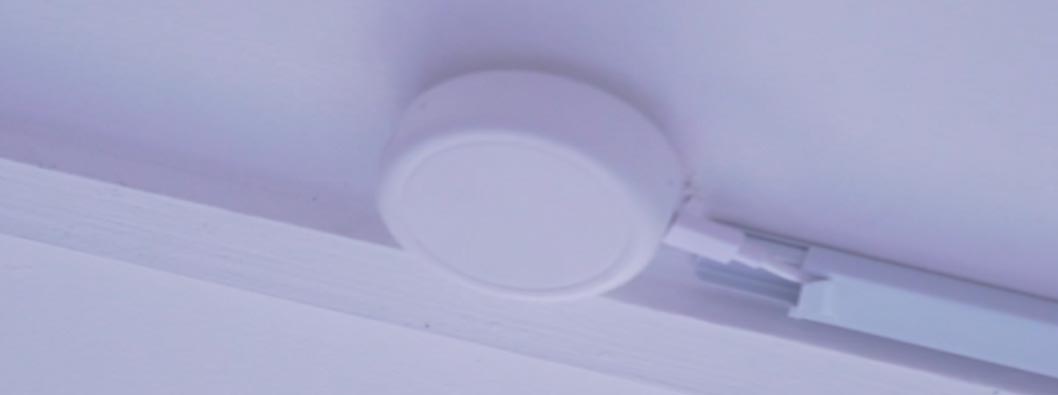
Instead of cameras or microphones, the system uses mmWave radar sensors placed in key areas such as the living room, bedroom, or kitchen. These sensors track movement patterns and inactivity, rather than capturing images or audio.
As Lim explains, “Project GUARDIAN uses a non-intrusive setup comprising discreet mmWave radar sensors placed in key areas of the home. These sensors do not use cameras, microphones or wearables — instead, they detect movement patterns and periods of inactivity.”
The setup is customised for each home, ensuring coverage without making the environment feel clinical or invasive.
This matters more than it might seem. Compliance is often the weakest link in eldercare tech because if a system requires active participation, it’s far more likely to fail.
What Happens When Something Goes Wrong?
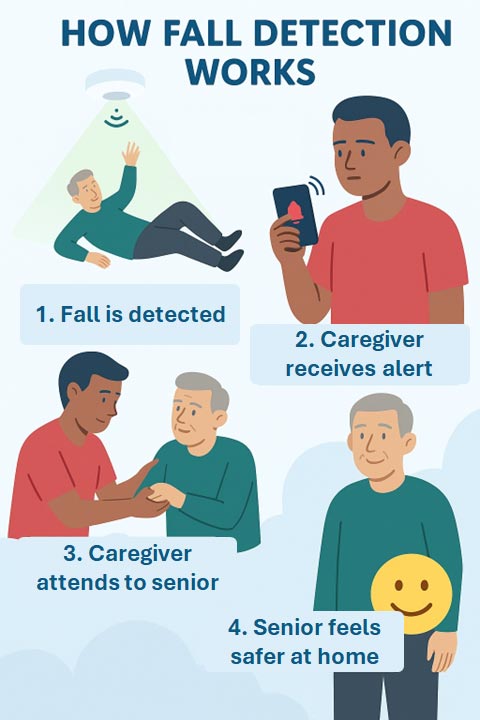
When a potential fall or unusual inactivity is detected, the system triggers an alert based on predefined thresholds.
But it doesn’t immediately escalate to emergency services.
Instead, there’s a layered response system:
- Alerts are first reviewed and verified
- Caregivers or care staff are contacted
- Family members may be notified next
- Emergency services are only engaged if the situation is confirmed to be urgent
This structured approach avoids unnecessary panic while still ensuring timely intervention.
It also reflects a more realistic model of care — one that blends technology with human judgement.
Who Can Access Project GUARDIAN?
While early pilots included specific estates, the programme is already expanding beyond initial locations such as Lucky Haven to areas such as Bukit Timah and Ghim Moh.
Access is not universal — at least not yet.
The system is currently offered through a means-tested and subsidised model, with selected beneficiaries receiving installations at no cost through funding and partnerships.
This raises a practical consideration: while the technology is promising, scaling it sustainably and equitably will be the real challenge.
How Is This Different From Other Fall Alert Systems?
Most people are familiar with wearable fall-alert devices: pendants or watches that require users to press a button or remember to wear them.
Project GUARDIAN removes that dependency entirely.
Its key differences:
- Passive monitoring (no need for user action)
- No cameras or audio recording
- Tracks broader daily activity patterns, not just falls
- Integrated into a community care ecosystem, linking seniors with caregivers, volunteers, and support programmes
That last point is worth paying attention to.
“Unlike wearable devices that require active user compliance, the system operates passively within the home environment…it is also integrated within a broader community care model, linking seniors with caregivers, care staff, volunteers and programmes,” Lim notes.
Technology alone doesn’t solve eldercare challenges — but when it’s embedded within a network of human support, it becomes far more effective.
How Project GUARDIAN Is Being Tested in the Community
Project GUARDIAN isn’t just a conceptual pilot. It’s already being implemented within real communities.
One such collaboration involves Lucky Haven, where the system is being deployed to support seniors living independently, alongside involvement from students at the Singapore University of Social Sciences (SUSS).
As part of this initiative, SUSS students also developed an AI-generated explainer video to help make the technology more accessible — breaking down how the system works in a way that is easier for both seniors and their families to understand.
This kind of collaboration highlights an often-overlooked aspect of ageing-in-place solutions:
it’s not just about the technology itself, but how it is communicated, adopted, and supported within the community.
The Bigger Question: Can Technology Really Replace Human Care?
There’s a tendency to frame solutions like this as either/or — technology versus human caregiving.
That’s probably the wrong way to look at it.
Systems like Project GUARDIAN don’t replace care — they extend visibility.
They help answer questions that many families quietly worry about:
- Did Mum get out of bed this morning?
- Has Dad been inactive for too long?
- What happens if something goes wrong when no one is around?
In that sense, the real value isn’t just in detecting emergencies — it’s in reducing uncertainty.
And for many families, that alone can make ageing-in-place feel far less risky.
What Comes Next
Scaling is already on the agenda, with plans to expand Project GUARDIAN to more homes and communities through partnerships with organisations and agencies.
But adoption will likely hinge on a few key factors:
Cost and accessibility beyond pilot groups
Public understanding and trust in passive monitoring
Integration with broader healthcare and community systems
Because while the technology is relatively straightforward, the ecosystem around it is not.
Final Thoughts
There’s a subtle but important shift happening in how we think about ageing.
It’s no longer just about helping seniors live longer — it’s about helping them live independently, safely, and with dignity.
And if solutions like Project GUARDIAN are any indication, the future of eldercare may not be louder or more visible — but quieter, more integrated, and increasingly built into the homes we already live in.
If you’re interested to get the system installed either in your home or your parents’ home, please send an email to [email protected] and the team will conduct a means assessment and home visit to evaluate the suitability of the space for installation.
Images: Envato (header) and Antica Foundation


 Natasha Mitter
 Melissa Fann


 Jose Ferrer