
This opinion piece was contributed by Dr Martha Tara Lee and has been lightly edited for clarity and readability.
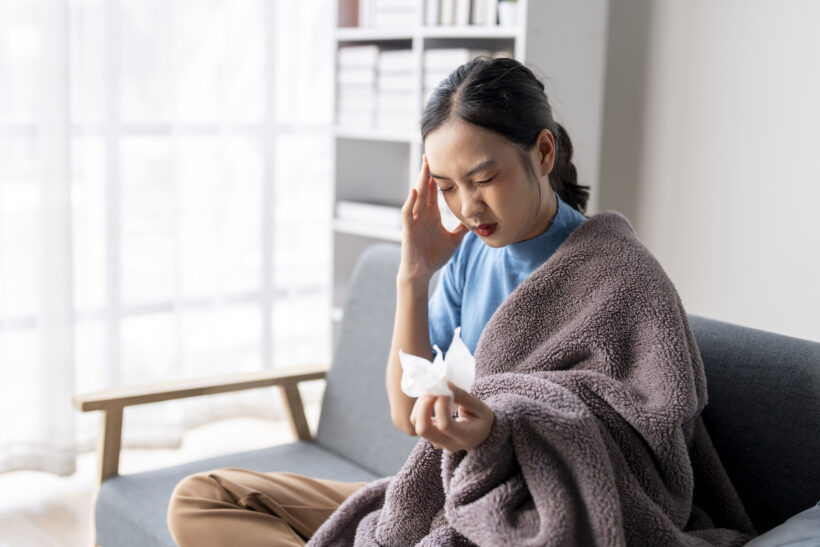
For almost two years, I kept complaining about a strange smell in my office that gave me headaches almost immediately after lunch.
Not “this smells unpleasant” headaches.
I mean burning eyes, an irritated nose, pressure in my head and headaches that could last the rest of the day.
Sometimes I would walk back into the office after lunch already bracing myself because within minutes, I would know whether the smell was there or not.
I probably made more than 10 complaints over that period because every time I smelled it, I felt physically unwell. I genuinely thought my neighbour was vaping because the smell felt chemical, artificial and oddly sweet at the same time.
Management eventually conducted an immediate spot check after one of my complaints and found no vaping — only some kind of air purifier or fragrance setup. My neighbour later sent an angry message in the group chat saying that they had never vaped.
The thing is: I was smelling something.
And my body was reacting to something.
What made the entire experience confusing — and honestly quite isolating — was that many people around me couldn’t smell it consistently at all. Not management staff. Not some friends. Not even some clients who visited my office.
Yet every time I smelled it, I still developed a headache.
To this day, I still don’t fully know what the exact trigger was.
Over the years, I’ve realised I’m unusually sensitive to scents and environmental triggers. I avoid perfumes, room sprays, heavily fragranced products and even some essential oils because even “pleasant” or “natural” smells can make me feel physically sick.
And I think this is something we still do not talk enough about.
Most people understand peanut allergies. Most people understand dust allergies. But scent and fragrance sensitivities are often dismissed because smells are so normalised in modern life.
Air fresheners, scented cleaning products, diffusers, laundry detergents, deodorising sprays and “hotel lobby” scents are everywhere now. And because many of these smells are associated with cleanliness, comfort, luxury or wellness, people often assume they must be harmless.
But “natural” does not automatically mean harmless for every individual body.
Even essential oils — while helpful and enjoyable for many people — can trigger headaches, nausea, dizziness, migraines, breathing difficulties or sensory overload in some individuals.
Years ago, I also underwent allergy skin testing and apparently reacted to almost everything, including dust.
What surprised me while reading further into this was realising how common fragrance sensitivity actually is.
One international study found that nearly one in three people reported health problems linked to fragranced products, including headaches, breathing difficulties, dizziness, migraines and cognitive difficulties.
Another study found that fragranced consumer products can create accessibility barriers in workplaces, healthcare settings, offices and public spaces for sensitive individuals.
Yet because these reactions are invisible, people suffering from them often end up feeling dismissed.
If somebody sees smoke, they understand.
If somebody sees a rash, they understand.
But when the trigger is invisible — a smell some people can detect and others cannot — you start sounding irrational very quickly.
Especially when the smell itself is associated with “cleanliness” or “wellness.”
Ironically, some of the smells that affect me most are not cigarettes or strong perfumes, but artificially “clean” smells. The aggressively fresh, deodorised, chemical-soapy smells that many people have become completely accustomed to.
The experience also made me think more deeply about how our nervous systems respond to modern environments. Sometimes the body reacts long before we consciously understand why.
I’m not writing this because I expect the world to become fragrance-free.
I’m writing this because I think many people genuinely do not realise that environmental sensitivities can have real physical effects on some individuals — even when everybody else around them feels completely fine.
Just because another person cannot smell or feel something the same way you do does not automatically mean your body is lying.
References
Steinemann, A. (2018). Fragranced consumer products: Effects on asthmatics. Air Quality, Atmosphere & Health, 11(1), 3–9.
Steinemann, A. (2019). International prevalence of fragrance sensitivity. Air Quality, Atmosphere & Health, 12(8), 891–897.
Tisserand, R., & Young, R. (2014). Essential oil safety: A guide for health care professionals (2nd ed.). Churchill Livingstone.
Images: Envato


 Melissa Fann
 Trevor Klass
 Guest Contributor