What comes to mind when you hear the word “femtech”?
My first association was probably not what the industry would hope for: vibrators.
That is not entirely wrong. Sexual wellness products can sit within femtech when they are designed around women’s sexual health. But femtech is much broader than sex tech, and there is a good chance you have already used it without ever calling it that.
If you have tracked your period on an app, monitored ovulation while trying to conceive, used a wearable to understand changes in your body, booked a women’s health teleconsultation or used technology to manage symptoms through pregnancy or menopause, you may already be using femtech.

So, what exactly is femtech?
Femtech is short for “female technology”. The term is generally used for technology, products and services designed around women’s health needs.
That can include period and fertility trackers, pregnancy and postpartum platforms, menopause and perimenopause support, pelvic-floor devices, sexual-health technology, breast and cervical health tools, telehealth services, wearables and, increasingly, artificial intelligence.
The World Health Organization has noted that digital health technologies can improve women’s access to healthcare and health information, particularly in areas such as maternal health, gynaecology and obstetrics. At the same time, access, digital literacy, privacy and inclusive design still matter if those tools are to improve health rather than simply create more data.
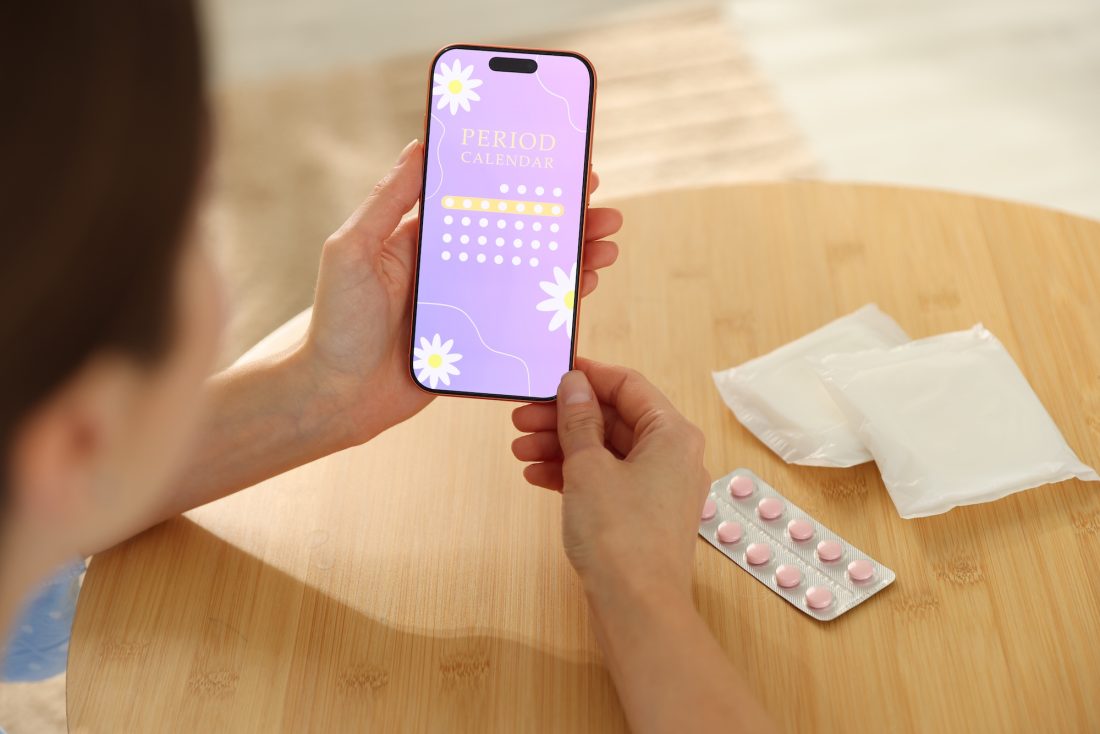
In other words, femtech is not necessarily a futuristic device. Sometimes it is simply the app you open every month to check when your period is due.
Women may be using femtech faster than they are learning the word
A newly released 2026 Southeast Asia Regional Women’s Health & Femtech Consumer Study by Milieu and FemTech Association Asia surveyed 6,000 women across Indonesia, Malaysia, Singapore, Thailand, the Philippines and Vietnam.
Only 27% of respondents were aware of the term “femtech”, up only slightly from 25% in 2024. Yet the researchers estimate that annual consumer spending on femtech products and services across the six markets grew from US$6.15 billion in 2024 to about US$8.37 billion in 2026, an increase of 36.1%.
The contrast is telling. The category appears to be growing much faster than awareness of its name.
That may be because consumers do not necessarily think they are buying “femtech”. They are looking for a way to predict their next period, understand why they are not sleeping well, track fertility, manage hot flushes or speak to a doctor without taking half a day off work.
Your period tracker counts
Period tracking is probably one of the easiest examples.
Someone may use an app simply to know when her next period is likely to arrive. Someone else may log cramps, mood, sleep, headaches or changes in appetite. Another may use the same data while trying to conceive.
What becomes interesting is what happens after we collect that information.
For example, there has been growing interest in using menstrual-cycle data to decide how to exercise. You may have seen “cycle syncing” advice that recommends harder training during one phase of the cycle and lighter workouts during another.
The idea sounds intuitive because hormones change across the menstrual cycle and symptoms can affect how someone feels. However, having cycle data does not automatically mean that there is one scientifically correct workout for every phase.
Recent research has found that exercise-performance differences across cycle phases are often small, inconsistent and highly individual. At the same time, symptoms such as cramps, fatigue, headaches, sleep disruption or heavy bleeding can absolutely affect how a particular person feels and performs.
That distinction matters. Tracking can help you notice patterns in your body, but the app should not be treated as an instruction manual simply because it can tell you what day of your cycle you are on.
Femtech is not just about periods and fertility
Women’s health has often been reduced to reproduction, and femtech has sometimes fallen into the same trap.
Periods, pregnancy and fertility are important, but women’s health also includes menopause, pelvic health, sexual health, chronic conditions, cardiovascular health, mental wellbeing, screening and preventive care.
That broader definition matters because some of the most useful applications of technology may be in helping people notice patterns, communicate symptoms more clearly and access appropriate care earlier.
We have already seen a similar shift in the wider personalised-health space. In our article on personalised health, we looked at how wearables, biomarkers and AI can produce more information about our bodies, while raising a harder question: does more information actually lead to better health decisions?
That question applies equally to femtech.

AI is becoming part of women’s healthcare too
The 2026 regional study also asked women how they felt about artificial intelligence in women’s healthcare.
Only 22% said they would prefer human healthcare providers only. In other words, 78% were open to some form of AI-assisted women’s healthcare.
The areas attracting the most interest were AI-powered early detection and risk screening (33%), AI chatbots for health guidance (32%) and AI-powered period, fertility or reproductive-health tracking (28%).
That openness should not be confused with unquestioning trust.
Accuracy and reliability of AI recommendations was the biggest concern, cited by 40% of respondents, followed closely by the privacy and security of personal health data at 38%.
The more personal the data, the more important the questions become
A period-tracking app may know when you menstruate. A fertility app may know when you are trying for a child. A menopause platform may contain information about symptoms, medication, sleep and mood.
That is unusually intimate data.
Before sharing it, it is worth asking a few basic questions: What information is being collected? Why does the company need it? Who can access it? Can the data be deleted? Is the tool giving general health information, or is it making recommendations that really require a clinician?
AI makes those questions even more important because it can combine multiple data points and generate conclusions that appear personalised and authoritative.
WHO has highlighted both the potential and the risks of AI in sexual and reproductive health, including questions around data quality, bias, privacy, safety and accountability.
We explored a similar tension in Are Digital Wellness Apps Helping — Or Overwhelming Us in Singapore?. Digital tools can give people useful information, but more information is not automatically more control.
You do not need to call it femtech for it to be useful
Perhaps the most interesting thing about femtech is that the label may matter less to consumers than it does to investors, founders and the healthcare industry.
Most people do not wake up wanting to use “female technology”. They want to know whether the pain they are experiencing is normal. They want help getting pregnant, managing menopause symptoms, understanding their menstrual cycle or deciding whether they need to see a doctor.
That may help explain why regional spending can grow while awareness of the term itself remains relatively low.
The useful question is not whether an app, wearable or service technically qualifies as femtech.
It is whether it helps you understand your body better, supports an appropriate health decision and treats your personal information responsibly.
You may already have femtech sitting on your phone.
You just call it your period app.
Sources: Milieu and FemTech Association Asia, 2026 Southeast Asia Regional Women’s Health & Femtech Consumer Study; World Health Organization, The role of digital health technologies in women’s health, empowerment, and gender equality; World Health Organization, The role of artificial intelligence in sexual and reproductive health and rights.
Images: Envato


 Melissa Fann
 Trevor Klass