Creatine used to feel like a product for serious bodybuilders: a large tub of powder kept beside the protein shaker, accompanied by instructions about loading phases, bulking and muscle gains.
That image is becoming outdated.
Recreational runners, HYROX and functional fitness enthusiasts, women and older adults are increasingly interested in creatine, not only for exercise performance but also for its possible role in healthy ageing and cognitive function. As the audience widens, consumers are asking more questions about dosage, product quality and whether a supplement actually contains what its label promises.
They are also asking a simpler, more practical question: will I take this consistently?
That has always been my problem with powdered supplements. Whether it is collagen, calcium or creatine, the flavour often changes the entire drink. Some powders are artificially sweet, some leave a chalky aftertaste and others only work with a narrow range of beverages.
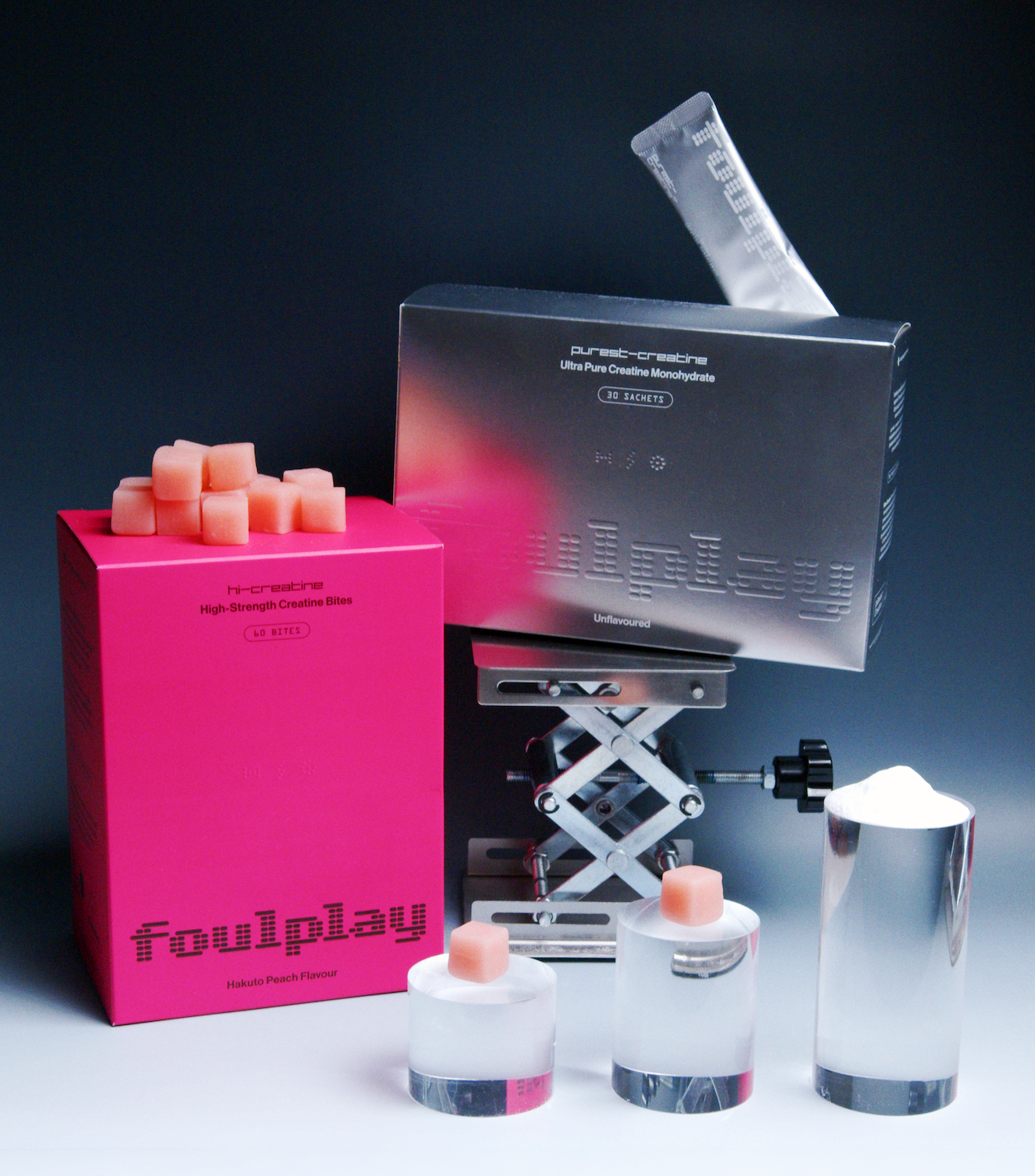
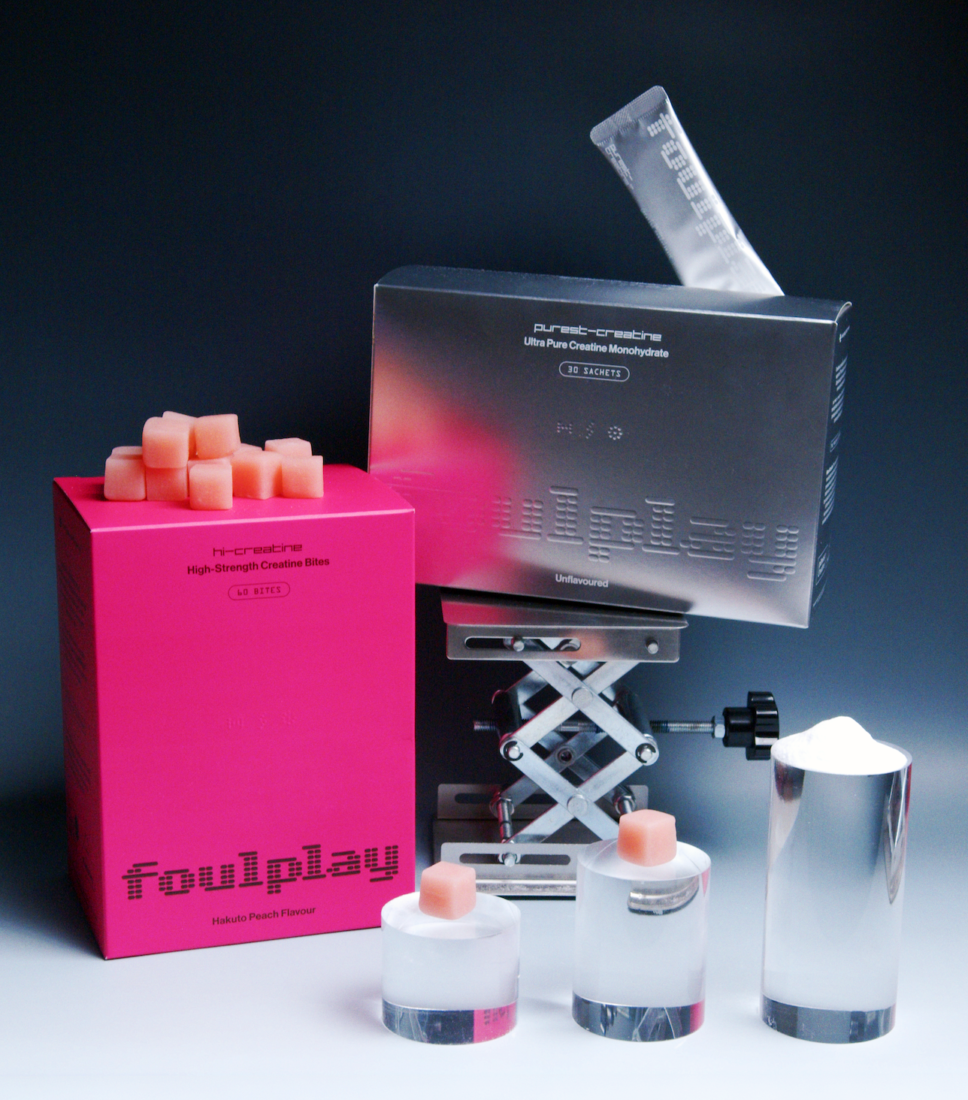
FOULPLAY Performance Nutrition sent me a box of its PUREST-CREATINE sachets to try. Each sachet contains five grams of unflavoured creatine monohydrate, and the company says the powder has a purity of 99.99 per cent. It is sold in boxes of 30 individually packed servings. The product page also states that it is third-party tested and produced in an NSF-GMP facility, with a viewable certificate of analysis.
I had also previously purchased FOULPLAY’s peach-flavoured HI-CREATINE Bites myself.
The two formats gave me a useful way to consider a question that often appears in discussions about supplements: is powder better than gummies, or does convenience matter more?

The supplement you will actually take
The first thing I appreciated about PUREST-CREATINE was that it was genuinely unobtrusive.
It did not add a noticeable taste to my drink, which meant I could mix it into almost anything without having to build the drink around the supplement. For someone who has abandoned other powders because of their flavour or texture, this matters more than it may appear.
The single-serving sachets also remove the need to measure out the powder. Each one contains five grams of creatine monohydrate, so there is less risk of taking an inconsistent amount or gradually becoming careless with the serving size.
The HI-CREATINE Bites solved the adherence problem in a different way. The peach flavour was so enjoyable that my concern was not forgetting to take them but stopping myself from treating them like ordinary sweets.
That is also an important downside of making supplements taste like confectionery: the serving instructions still matter. A gummy containing an active ingredient should not be eaten freely simply because it tastes good.
Ryan Foo, Founder of FOULPLAY Performance Nutrition, believes consistency should be central to the debate over supplement formats.
“Powder is cheaper per gram and very stable when dry, whereas gummies win on taste, convenience and the thing that really decides results, which is whether you take it every day,” he said.
“The best format is really the one you will not quit.”
Do creatine gummies work as well as powder?
| Powder | Gummies |
|---|---|
| Easier to dose | Easier to remember |
| Usually cheaper | More convenient |
| Needs mixing | Ready to eat |
| Can taste chalky | Better taste |
| Stable | Requires careful formulation |
According to Ryan, creatine monohydrate remains the same ingredient whether it is delivered through powder, capsules or gummies.
“The real question is not whether the format works,” he said. “It is whether the format reliably delivers the dose printed on the label.”
Gummies create particular formulation challenges. Creatine takes up physical space, limiting how much can fit comfortably into each gummy. The product also has to remain stable within a moist and potentially acidic environment.
Ryan explained that creatine can gradually convert into creatinine, an inactive breakdown product, under certain conditions.
“A gummy that tests at full dose on the day it is made will not necessarily hold that dose months later unless it is built and tested for it,” he said.
This means shoppers should look beyond phrases such as “contains creatine”. The relevant figure is the amount of creatine delivered in the complete recommended serving.
Consumers should also check whether the manufacturer has tested the finished product rather than relying solely on specifications provided by the raw-ingredient supplier.

What I noticed after taking creatine
I have not been exercising consistently during this trial, so I cannot meaningfully comment on improvements in strength, repetitions, training recovery or muscle performance.
I did notice some bloating. However, that observation needs context.
Creatine draws water into muscle cells, and some initial weight gain or a feeling of fullness can occur. This is different from gaining body fat. Some people may also experience gastrointestinal discomfort, particularly when taking large amounts, using poorly dissolved powder or consuming it with insufficient fluid.
Ryan said this is one of the most frequently misunderstood aspects of creatine.
“The water it pulls in sits mostly inside your muscle cells, not under your skin,” he explained. “That intracellular water can make muscles look fuller; it is not the puffy, subcutaneous bloating people picture when they worry about it.”
He also questioned whether the traditional practice of consuming a high “loading” dose is necessary for most people.
“A single clinical dose taken daily reaches the same saturation in a few weeks, without the rapid water shift or the stomach upset,” he said.
My most noticeable experience was not physical performance but how I felt in the morning.
When I took creatine at night, I found that I got through my usual morning brain fog more quickly the following day. Waking up felt less difficult, and I did not spend as long struggling to become mentally alert.
This is only my personal experience. It does not prove that creatine improves sleep, treats fatigue or eliminates brain fog. I also cannot rule out other explanations, including changes in sleep quality, hydration, diet or expectation.
Nevertheless, the observation is interesting because scientists are studying creatine’s role in brain energy metabolism and cognitive performance. Reviews have reported possible benefits in areas such as memory, attention and processing speed, but the evidence is not yet consistent enough to promise that a standard daily dose will make everyone more alert.
Studies examining sleep deprivation have also used conditions and, in some cases, doses that are very different from ordinary daily supplementation. Creatine should therefore not be presented as a substitute for adequate sleep.

How can someone tell whether creatine is working?
People expecting an immediate burst of energy may conclude too quickly that creatine does nothing.
“Creatine is not a stimulant, so the first thing to understand is that you will not feel it the way you feel caffeine,” Ryan said.
Creatine helps replenish phosphocreatine stores used to regenerate cellular energy during short, demanding efforts. Its effects are therefore more likely to appear in measurable training outcomes than as a particular sensation.
Ryan suggests looking for gradual changes such as being able to complete an additional repetition at the same weight, maintaining better form or output during the final sets of a workout, or recovering more effectively between repeated efforts.
“Creatine works through saturation, and saturation only holds if you take it every day,” he said.
He also stressed that supplementation cannot replace training.
“Creatine rewards people who train; if you are not putting in the work, you will not see much.”
This is why my own trial cannot be considered a full assessment of its best-established use. Without consistent exercise and baseline performance measurements, I cannot attribute changes in physical ability to the product.
Creatine myths that refuse to disappear
Creatine is one of the better-studied sports supplements, but several longstanding misconceptions continue to make people wary of it.
One is that creatine is a steroid. It is not. Creatine is a compound produced naturally by the body and is also obtained through foods such as meat and fish.
Another common concern is kidney damage. In healthy people taking conventional doses, existing research does not support the claim that creatine causes kidney damage. However, creatine supplementation can affect levels of creatinine, a marker used in kidney-function assessments. Anyone undergoing blood tests should tell their healthcare professional that they take creatine.
People with existing kidney conditions, other medical concerns, or medications that affect kidney function should seek medical advice before starting any supplement.
The claim that creatine causes hair loss largely stems from a small 2009 study involving 20 male rugby players. While the researchers observed an increase in dihydrotestosterone (DHT), a hormone associated with androgenetic hair loss, the study did not measure hair loss itself. Subsequent research has also not confirmed that creatine causes hair thinning or baldness.
“It never measured hair loss itself, and it has never been replicated, yet it gets repeated as fact,” Ryan said.
Creatine is also not exclusively for men. Research increasingly includes women, older adults and people interested in maintaining muscle function beyond competitive sport, although some of its proposed uses still require stronger evidence.

What should consumers check before buying creatine?
Ryan recommends beginning with the form of creatine being used.
“Creatine monohydrate is the gold standard: the most researched, the most effective and the best value,” he said.
Products sometimes promote creatine hydrochloride, buffered creatine or other alternatives as more advanced versions. These may be more expensive, but a higher price or more complicated name does not necessarily mean better results.
Consumers should then examine four points:
The dose: Check how many grams of creatine are provided in the full serving, not merely whether creatine appears in the ingredient list.
The ingredient: Creatine monohydrate has the largest body of supporting evidence.
The serving instructions: Gummies may require several pieces to reach the stated dose, while powders should provide a clearly defined scoop or sachet.
The verification: Look for independent testing and a certificate of analysis that identifies what was tested, when it was tested and whether the finished product met the relevant specifications.
“A brand confident in its quality will tell you its purity and, ideally, show you a certificate of analysis,” Ryan said.
A certificate of analysis is not a universal seal of approval. Consumers still need to examine whether it applies to the actual product or batch, which laboratory conducted the test and which substances were included. However, making the document available provides more information than asking customers to accept marketing statements on trust.
Powder or gummies?
After trying both formats, I do not think there is a universal winner.
PUREST-CREATINE is the more flexible option for me. It is tasteless, easy to mix into different drinks (and even into my yoghurt) and already divided into single servings. It suits someone who wants a straightforward five-gram dose without adding sweetness or flavour.
The HI-CREATINE Bites make supplementation feel effortless and enjoyable. Because of that, I did find myself remembering to eat it more consistently. The peach flavour is genuinely appealing, but that also makes portion discipline important.
Neither convenience nor taste can establish whether a supplement is effective. That depends on the ingredient, dose, product stability and whether it contains what the company claims. At the same time, the theoretically perfect supplement provides little value when its taste or preparation is so unpleasant that it remains untouched in the cupboard.
For consumers, perhaps the more useful question is not whether powder or gummies are inherently superior.
It is whether the product delivers an appropriate, verified dose in a form they can take consistently — without mistaking an enjoyable supplement for an unlimited snack.
Disclosure: FOULPLAY Performance Nutrition provided a box of PUREST-CREATINE sachets for review. The writer purchased the HI-CREATINE Bites independently. The company did not review or approve the writer’s personal observations before publication.
Images: FOULPLAY Performance Nutrition and Envato


 Melissa Fann


 Trevor Klass