Travel is often sold as an escape.
Escape the routine. Escape the weather. Escape work. Escape the noise.
There is nothing wrong with wanting a break, but that framing can make travel sound more frivolous than it is. A good trip does not simply remove us from everyday life for a few days. It can give us distance from the patterns, responsibilities and assumptions that are difficult to notice when we are living inside them.
That may be one reason holidays can feel mentally restorative even when they involve early flights, unfamiliar transport systems and far more walking than we would normally do at home.
Newer research also suggests the wellbeing effects of taking leave may be more meaningful than older studies once indicated. A 2025 meta-analysis published in the Journal of Applied Psychology, covering 32 studies and 256 effect sizes, found that vacations had a large positive effect on employee wellbeing and that the benefits did not disappear as quickly as earlier research had suggested.
That does not mean everyone needs an expensive long-haul holiday to protect their mental health. Nor does travel fix burnout, relationship problems or an unsustainable workload.
But used well, travel can create something many of us struggle to find in ordinary life: genuine psychological distance.
Travel interrupts the routine your brain has learned
Most days are built around repetition.
We take the same route, look at the same screens, respond to the same people and move through familiar environments. Routine is useful because it reduces the amount of conscious decision-making required to get through the day.
The downside is that it can also make our thinking narrower.
Travel forces us to pay attention again. We have to work out where to go, read unfamiliar signs, notice how other people behave, decide what to eat and adapt when plans change. Even a simple trip can temporarily take us out of autopilot.
There is some evidence that novelty may matter cognitively too. A 2025 study in Tourism Management found that novel environments could increase one dimension of creativity — cognitive flexibility — through greater interest and engagement. The effect was specific rather than universal: novelty improved flexibility, not necessarily originality.
That distinction matters. Travel does not magically make someone more creative or enlightened. What it can do is expose the brain to enough difference that familiar problems are no longer being viewed from exactly the same angle.

The real benefit may be detachment, not distance
The 2025 vacation meta-analysis found that psychological detachment from work was among the vacation experiences most strongly associated with better wellbeing.
This helps explain why flying somewhere beautiful while still answering emails may not feel particularly restorative.
Your body has changed location, but your attention has not.
We have written before about the mental load that keeps people mentally “on” even during supposedly restful moments. Travel can interrupt that constant background processing, but only if we allow the interruption to happen.
That might mean setting expectations before taking leave, turning off work notifications, resisting the urge to optimise every hour of the itinerary, or giving yourself permission to have parts of the day with no plan at all.
This is also why the best holiday for recovery is not necessarily the most luxurious one.
A short regional trip where you genuinely switch off may do more for you than an expensive week abroad spent monitoring Slack, checking sales figures and trying to keep everyone else happy.
Movement matters too
Travel often changes how we move without requiring us to schedule exercise.
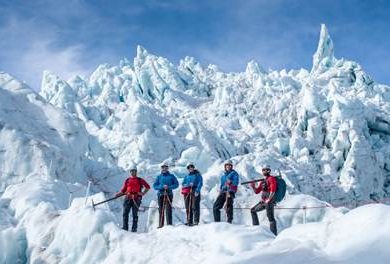
We walk through neighbourhoods, museums and markets. We swim. We hike. We climb stairs in train stations. We spend more time outside simply because there is somewhere new to explore.
The same 2025 meta-analysis found that physical activity during vacations was positively associated with wellbeing during and after the break.
That does not mean every holiday needs to become a fitness retreat. The point is simpler: travel can make movement feel purposeful rather than prescribed.
Walking 15,000 steps because you are exploring a city often feels very different from staring at 15,000 steps as a daily target on a watch.
Travel can help you notice what you have stopped noticing
One of the less measurable benefits of travel is contrast.
You notice how another city uses public space. How late people eat dinner. How families spend their weekends. How much — or how little — shops stay open. How people commute, socialise, exercise or rest.
None of those differences automatically makes another culture “better”. But comparison can make our own habits visible.
Sometimes we return home appreciating what works in Singapore more than we did before. Other times, we come back questioning routines we had assumed were inevitable.
That may be one reason experience is becoming such an important part of how people choose holidays. As we explored in our article on what travellers want from their holidays in 2026, trips are increasingly being built around what people want to feel or experience — whether that is the intensity of a Formula 1 weekend, a concert in another city, winter weather or several days of deliberate digital disconnection.
The destination matters, but so does what the destination allows us to experience differently.

But travel is not a cure for burnout
This is where the wellness narrative around travel can become unhelpful.
If you are exhausted because you have too much work, too little control over your time or responsibilities that never stop, a holiday may make you feel better for a while. It does not remove the conditions waiting for you when you return.
We have made a similar argument in our coverage of workplace wellbeing: you cannot self-care your way out of a burnout culture. Employers cannot keep unhealthy workloads intact and then treat annual leave as the repair mechanism.
The same applies personally.
If every holiday is desperately needed because normal life has become unbearable, the question is not only where you should travel next. It may also be what needs to change between trips.
Travel can create space to think about that question. It should not be expected to solve it for us.

You do not have to fly halfway around the world
“Travel more” can also sound tone-deaf when flights, accommodation and time away from work are expensive.
The research does not show that recovery requires another continent. In fact, the 2025 meta-analysis found that the role of vacation location — travelling away, staying at home or mixing the two — remained unclear.
That is useful because it shifts the emphasis from collecting destinations to creating meaningful breaks from routine.
For someone in Singapore, that might mean a long weekend in Penang, Ipoh, Desaru or Batam. It could be a few days somewhere cooler, especially as more Singapore travellers look towards cooler destinations and off-peak travel. It could also mean exploring a neighbourhood or island closer to home with the same curiosity you would bring overseas.
Not every restorative break has to become content, a bucket-list achievement or a major financial event.
How to make more travel realistically possible
If travel matters to you, the most sustainable approach is usually to make it part of your planning rather than wait for the mythical moment when you suddenly have unlimited money, leave and energy.
- Think in different trip sizes. One major holiday does not have to be the only model. A mix of day trips, regional weekends and occasional longer trips can spread the cost and effort.
- Travel for a reason you genuinely care about. A concert, food, nature, visiting friends, a race or simply cooler weather can make a short trip feel more meaningful than ticking off attractions.
- Use off-peak periods where possible. Travelling outside major school-holiday and festive periods can sometimes reduce both prices and crowds.
- Leave space in the itinerary. If every hour is scheduled, travel can reproduce the same pressure you were trying to escape.
- Protect the detachment. If work follows you everywhere, changing countries may not create much recovery at all.
And if international travel simply is not financially realistic right now, that does not mean you are failing at wellbeing. There are plenty of ways to create novelty, movement and psychological distance without booking a flight. Our list of free ways to feel better over a weekend is a useful place to start.
Travel more — but not because your life needs escaping
Perhaps the strongest case for travel is not that it lets us run away from ordinary life.
It is that, for a short while, ordinary life stops being the only reference point.
We encounter different routines, environments, people and ways of doing things. We move more. We pay attention. We are reminded that the world is larger than the problem, deadline or responsibility currently occupying most of our mental space.
Then we come home.
The goal is not necessarily to return transformed. Sometimes feeling rested, curious or slightly less mentally crowded is enough.
Travel cannot fix everything waiting for us. But it can give us enough distance to see some of it differently.
Research referenced: Grant RS, Buchanan BE, Shockley KM. “I need a vacation: A meta-analysis of vacation and employee well-being.” Journal of Applied Psychology. 2025;110(7):887–905; and research on environmental novelty and cognitive flexibility published in Tourism Management in 2025.
Images: Envato


 Shaameli Nadarajah
 Melissa Fann
 Jose Ferrer


 Guest Contributor