
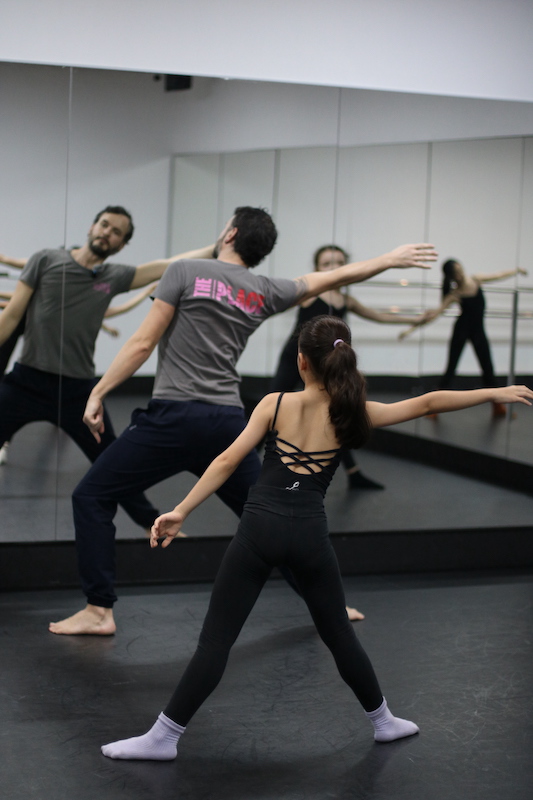
Beyond the Glamour: What People Assume Dance Training Looks Like
For many parents, dance still sits in a strange category.
It is often viewed as enriching but temporary — something children enjoy for a few years before eventually moving on to something more “serious”. The image attached to dance training also tends to revolve around performance itself: costumes, competitions, polished routines and stage lights.
What is less visible is the emotional and psychological framework that sits underneath serious training.
Not the recital, but the repetition. Not the applause, but the discipline of returning to something difficult over and over again.
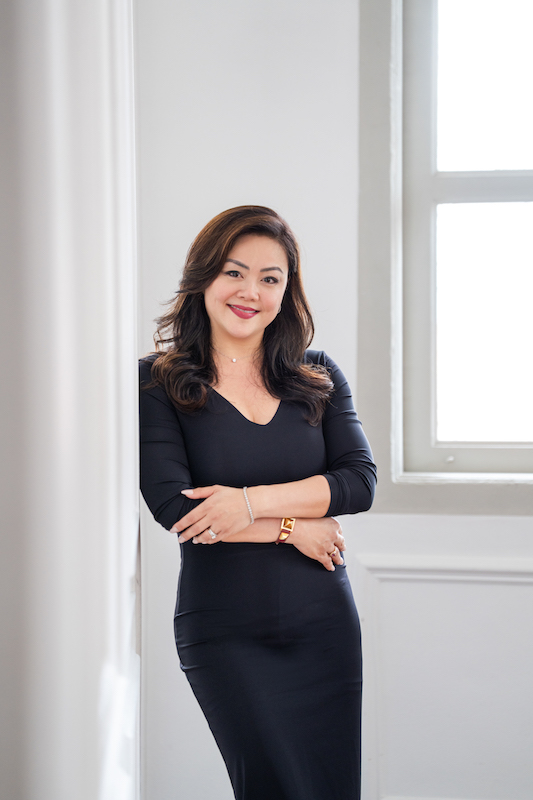
Vicky Lee Ward, Founder of All That Jazz Dance Academy, believes perceptions have started shifting in recent years, particularly as more parents begin recognising that creative training develops far more than technical skill alone.
“When I started in this industry, the default parent script was dance for a few years, then we’ll see,” she explains.
But over time, families who stayed the course started noticing changes that extended well beyond the studio: children becoming more focused, more self-aware, more resilient and better able to navigate pressure.
That distinction matters because modern life increasingly demands emotional endurance from both adults and children alike.
Confidence today is often discussed as though it is a personality trait people either naturally possess or lack. Yet Ward argues that many of the qualities parents hope their children will develop — communication, adaptability, self-trust and resilience — are actually trained behaviours.
“The ability to hold yourself with authority. To make a decision quickly and commit to it. To receive hard feedback and not fall apart,” she says. “These aren’t personality traits you either have or you don’t. They’re things you learn.”
And perhaps that is what many parents still misunderstand about serious creative training.
The most valuable lessons are often invisible while they are being built.
The Reality of Repetition, Corrections and Uncertainty
The reality of professional dance training rarely resembles the polished final outcome audiences eventually see on stage.
Much of it involves repetition, corrections, uncertainty and learning how to continue despite discomfort or self-doubt.
Ward describes serious training as an environment where students slowly learn how to function without immediate reassurance.
“There’s a lot of uncertainty in training,” she says. “You don’t always get immediate results. You might spend weeks refining something very small.”
That process can feel deeply uncomfortable in achievement-oriented environments where progress is expected to be measurable and visible. Yet creative disciplines rarely unfold neatly.
Improvement fluctuates. Confidence rises and falls. Bodies respond differently depending on stress, recovery, sleep and emotional state.
Ironically, many of these same realities are now surfacing in broader conversations around burnout and wellness. Increasingly, people are recognising that chronic stress does not always look dramatic. Sometimes it appears quietly through exhaustion, emotional detachment or the subtle feeling of running on stress hormones instead of energy.
Dance training simply makes those tensions harder to ignore because the body itself becomes part of the conversation.
Students learn quickly that pressure cannot always be overcome through brute force alone.
Why Adaptability Matters More Than Perfection
One of the strongest themes running through Ward’s perspective is the idea that adaptability matters more than perfection.
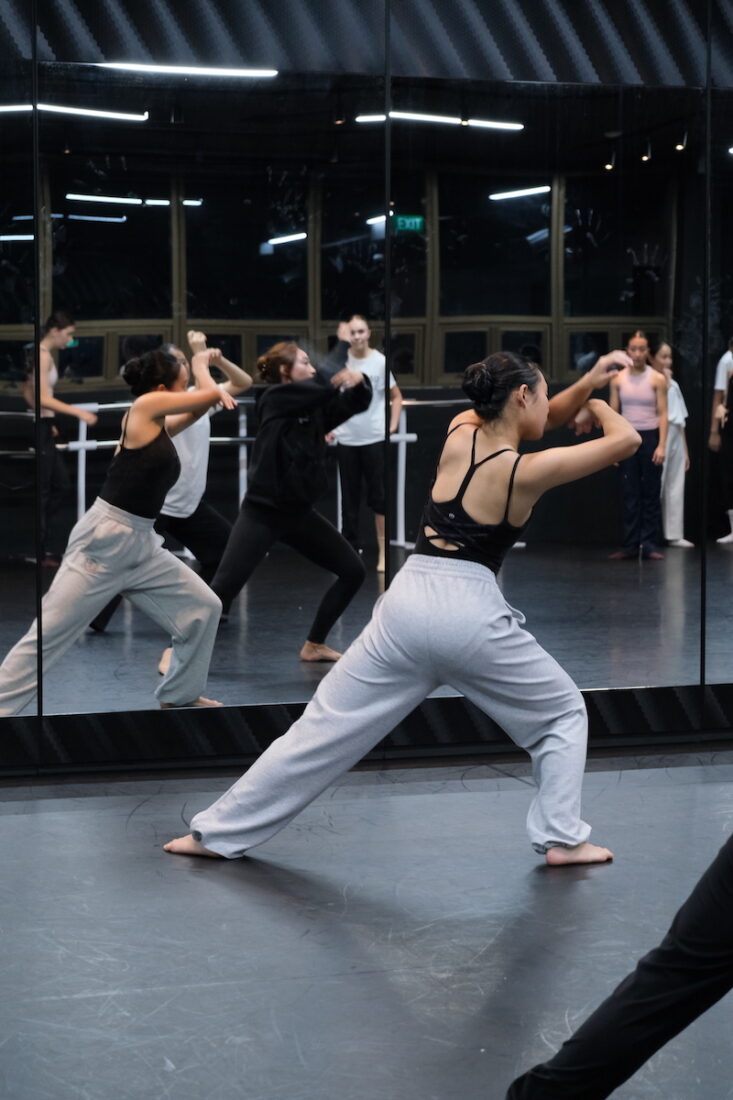
In multi-genre dance training, students are constantly moving between different expectations, different movement languages and different forms of communication. Ballet demands one kind of precision. Contemporary asks students to take emotional risks. Street and commercial styles require spontaneity, instinct and awareness of the room around them.
“When a student has genuinely worked across all of that, they’re not just versatile physically,” Ward says. “They’ve learned to think in different ways, to move between different worlds without losing themselves.”
That ability to adapt often becomes more valuable than technical perfection itself.
Parents sometimes worry that serious dance training locks children into rigid pathways too early. Ward believes the opposite is often true. “The greater risk,” she says, “is overspecialising before students have enough experience to truly understand themselves.”
“The students I’ve seen feel locked in are almost always the ones who were put on a single track before they had the experience to really choose it.”
That idea feels increasingly relevant beyond dance itself.
Modern adulthood often demands the same kind of flexibility: the ability to move between changing expectations while maintaining some sense of identity underneath it all.
The Pressure to Perform — On Stage and In Everyday Life
Performance pressure does not only exist inside studios.
Many adults already move through life in a near-constant state of evaluation — professionally, socially and emotionally. Productivity is monitored. Confidence becomes performative. Even rest can begin to feel transactional.
Dance training simply concentrates many of those pressures into a visible environment.
Students are corrected publicly. They experience failure repeatedly. They learn to function despite uncertainty. And unlike many traditional academic environments, there is rarely one single “correct” answer.
Ward notes that internationally, dance institutions are increasingly looking beyond technical excellence alone. Adaptability, curiosity and emotional maturity now matter just as much.
“They want to know what this student offers that no one else does,” she explains. “They’re looking for someone who doesn’t just follow the crowd, who has real depth of character, who thinks for themselves.”
That shift reflects something much broader happening culturally.
Perfection itself is becoming less sustainable as a life strategy.
People are increasingly rewarded not for appearing flawless, but for being able to adapt, recover and continue functioning through uncertainty.
Recovery Is Part of Performance Too
For decades, many performance environments operated on the assumption that pushing harder was always better.
But conversations around recovery are changing.
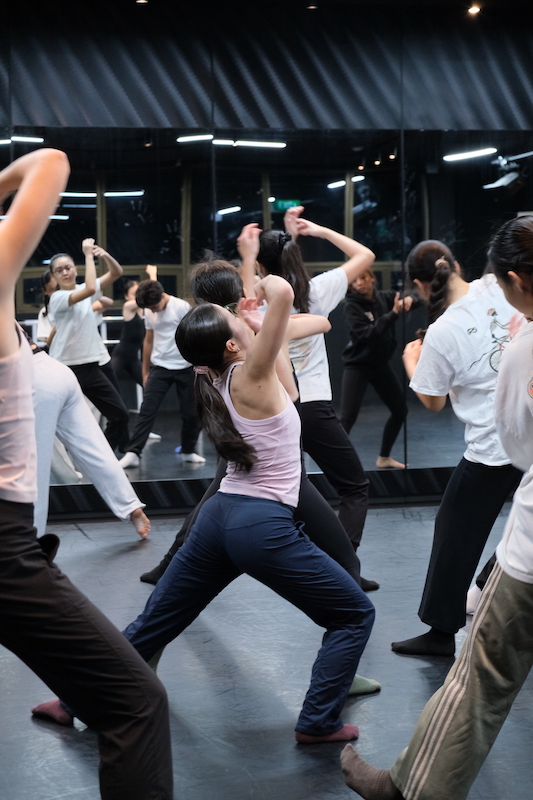
Ward believes healthier training cultures increasingly recognise that rest and sustainability are not separate from performance — they are part of it.
“There’s more understanding now that rest is part of training,” she says.
That idea still challenges many adults, particularly parents who grew up equating productivity with worth. Slowing down can feel uncomfortable, even guilt-inducing, despite growing conversations around why rest is productive rather than indulgent.
The irony, of course, is that exhaustion itself is unsustainable.
Bodies eventually push back. So do emotions.
Dance training forces students to confront that reality earlier because the body itself is central to the work. Recovery cannot simply be postponed indefinitely.
And perhaps that lesson matters far beyond dance.
Body Expectations, Confidence and Learning to Work With Your Body
Body expectations continue to shape how many people experience movement, confidence and self-worth.
Dance has historically carried rigid physical ideals, particularly within classical training environments. But conversations around body diversity and self-perception are slowly evolving.
Ward acknowledges that body image pressures still exist within dance spaces, but believes awareness is shifting.
“There’s more awareness now that strong doesn’t always look one particular way,” she says.
That conversation no longer belongs only to dancers.
Social media, wellness culture and constant visual comparison have made body scrutiny part of ordinary life for many adults. People often become hyper-aware of how they appear while simultaneously feeling disconnected from how their bodies actually feel.
Perhaps that is why more readers are beginning to realise that body confidence isn’t about loving your body every day, but learning to exist within your body without constant punishment or scrutiny.
Movement, at its healthiest, reconnects people to function rather than appearance alone.
And serious training, when approached sustainably, can become part of that process rather than opposing it.
What Parents Often Get Wrong About Creative Training
Perhaps the biggest misconception parents hold is that creative training is only valuable if it eventually leads to a professional outcome.
But Ward says many of the students who return years later did not become professional dancers at all. What stayed with them instead was the way training shaped how they approached life itself.
“They’ll describe it as presence, or the way they approach a problem, or just how they move through the world,” she says. “But I know where it came from.”
That perspective reframes dance training entirely.
It stops being solely about performance and starts becoming about how people learn to navigate discomfort, uncertainty and self-expression over time.
Ward believes parents play a critical role in shaping whether children develop a healthy relationship with creative training or an anxiety-driven one. Often, she says, pressure does not begin inside the studio itself but in the conversations that happen afterwards.
“The most consistent source of performance anxiety I see in young dancers isn’t the studio,” she explains. “It’s the thirty seconds after a parent asks ‘How did you do?’ with an evaluative frame.”
Instead, she encourages parents to orient conversations around curiosity rather than outcomes.
“What did you work on today?” rather than “Were you the best?”
And perhaps that advice extends far beyond dance too.
Because in a culture increasingly shaped by pressure, optimisation and comparison, the ability to fail safely may ultimately become one of the most important forms of resilience children can develop.
Images: All That Jazz Dance Academy


 Melissa Fann
 Trevor Klass



 Rui Ting Goh



1 comment