Singapore’s falling birth rate isn’t just about money. Here’s why parenthood in Singapore still feels harder than it needs to be — and what could change.
Every time Singapore’s birth rate makes the headlines, the same question follows:
Why aren’t Singaporeans having more children?
The answers are usually familiar. The cost of living. Housing. Careers. Lifestyle choices.
My husband and I have our own answer.
We joke that we’ll try for a second child if we strike TOTO.
Friends laugh whenever we say it. We laugh too.
But like many jokes, there’s an uncomfortable truth behind it. Our resident total fertility rate hit a record low of 0.87 in 2025, down from 0.97 the year before (Department of Statistics Singapore¹). A decade ago it was 1.24.
We would love for our daughter to have a sibling. Yet every time the conversation comes up, it isn’t our desire that holds us back. It’s the long list of practical questions that follows.
Can we afford a bigger flat?
How much will another pregnancy cost?
What if there are complications again?
Can we cope with childcare?
Will our work allow it?
Perhaps we’ve been asking the wrong question all along.
Instead of asking why Singaporeans aren’t having more children, perhaps we should ask why parenthood in Singapore still feels so difficult.
Parenthood begins long before the Baby Bonus
Whenever policies to encourage births are discussed, the Baby Bonus inevitably becomes part of the conversation.
While every bit of support helps, the financial commitment of having a child begins long before a baby is even born. For couples who need help conceiving, that commitment starts even earlier. MOH co-funds up to 75% of Assisted Conception Procedures like IVF at the three public centres (KK Women’s and Children’s Hospital, NUH and SGH), capped at $7,700 per fresh cycle and $2,200 per frozen cycle, on top of MediSave withdrawals of up to $15,000 over a couple’s lifetime (Ministry of Health²). It helps. But it only applies at public centres, and only to married couples.
Because of my existing medical conditions, I chose to continue seeing my obstetrician privately throughout my pregnancy. Some people may say I could have gone through the public healthcare system instead, and for many families, that’s a perfectly reasonable option.
But for those with more complex medical histories, continuity of care matters.
You want the doctor who already knows your body, your history and your risks.
Between consultations, scans, tests and delivery, the bills can easily add up to several thousand dollars before your baby has even arrived.
If Singapore genuinely wants to encourage more births, perhaps we should spend less time talking about what parents receive after birth and more about reducing the financial barriers during pregnancy itself.
Would it make more sense to provide greater support for antenatal care or subsidise delivery costs more substantially?
After all, every Singaporean child begins there.
When childbirth doesn’t go according to plan
Every parent hopes for a healthy baby and a smooth delivery.
Not everyone gets one.
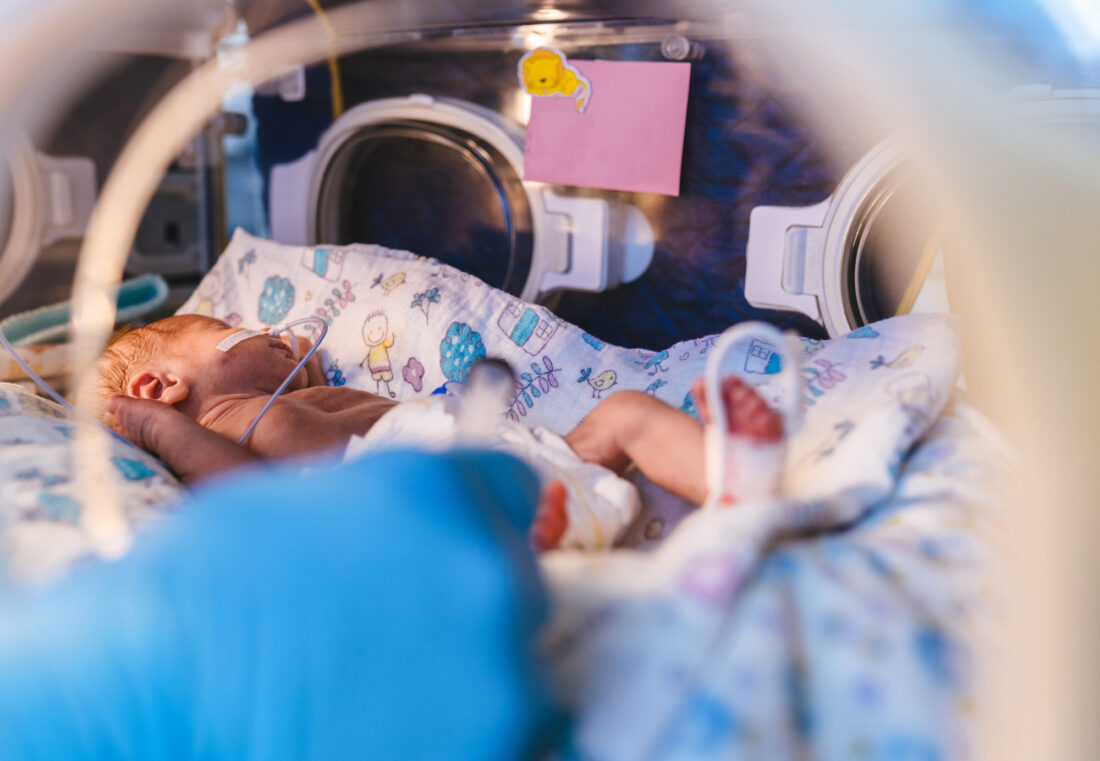
Our daughter spent almost a month in the Neonatal Intensive Care Unit (NICU).
Watching your newborn fight through those first weeks is emotionally exhausting.
Receiving the hospital bill afterwards shouldn’t become another trauma.
We were fortunate that subsidies significantly reduced what would otherwise have been an enormous bill, but we were only able to get those subsidies because we had already chalked up a significant amount at the private hospital before we were able to transfer her to a public hospital that was willing to receive her.
But the experience also exposed how vulnerable many families are when unexpected complications arise.
Many insurance plans don’t cover conditions that exist from birth. Newborn policies often provide limited NICU benefits that fall far short of the actual cost of intensive care.
No parent plans for their baby to need intensive care.
But no parent should have to worry about whether they can afford it while their child is fighting to survive.
It’s not the price of housing alone
Housing is often cited as one of the reasons couples delay having children.
Yes, homes have become more expensive.
When I bought my three-room flat, I still had to pay S$10,000 in cash upfront before relying on my CPF savings and an HDB loan. I was fortunate to have secured a stable job soon after graduation and accumulated CPF savings over time.
My husband didn’t have the same career path, which means our combined CPF savings today are very different from what mine alone once looked like.
Upgrading isn’t impossible.
But it means taking on a significantly larger mortgage at the same time we’re thinking about pregnancy costs, childcare and raising another child.
For many families, these decisions don’t happen one at a time.
They happen all at once.
There’s another reality that doesn’t get talked about enough.
Homes today are expected to serve many more purposes than they did a generation ago.
A spare bedroom isn’t automatically reserved for a future child anymore. It may already be a home office because someone works remotely, a study, a hobby room or simply much-needed storage.
Modern life demands more from the spaces we live in than it did twenty or thirty years ago.
Childcare should help parents return to work too
Singapore has invested heavily in childcare, and many families have benefited from the subsidies available.
But one aspect has always puzzled me.
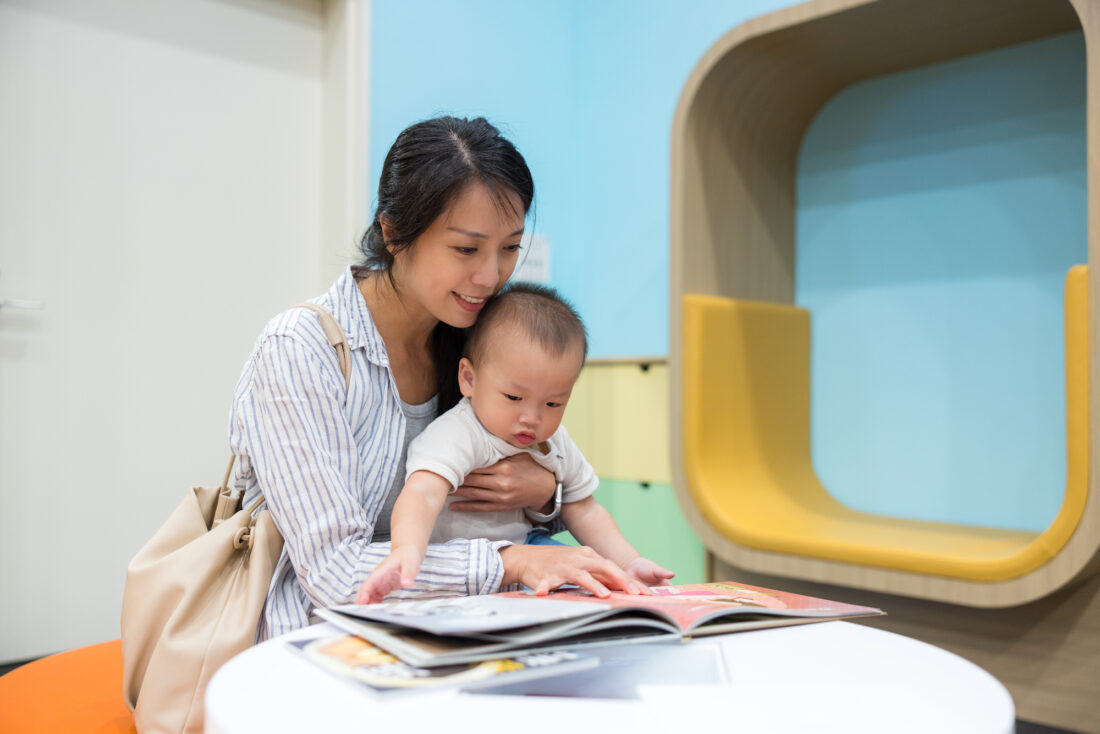
Why should affordable childcare depend so heavily on whether a mother is already employed?
The numbers make the gap concrete. A working mother (defined as at least 56 hours of work a month) gets a Basic Subsidy of $600 for infant care and $300 for childcare, plus an Additional Subsidy of up to $710 and $467 respectively if household income is $12,000 or below. A non-working mother gets a flat $150 a month, with no Additional Subsidy in most cases (ECDA³). There’s been some movement here — since December 2024, non-working mothers from lower-income households can qualify for the full subsidy for childcare programmes, and others can apply for time-limited Special Approval. But infant care and most middle-income households are still excluded, which may make those in the sandwich generation feel even more sandwiched.
Many mothers who are currently unemployed aren’t choosing never to work again.
They’re trying to return to the workforce.
Affordable childcare could make that possible.
Without it, attending interviews, retraining or accepting a job becomes significantly harder.
If childcare subsidies are meant to encourage workforce participation, shouldn’t they also help parents get back into work instead of mostly supporting those who are already employed?
Some may argue that grandparents can step in. But that assumes they’re healthy and able-bodied enough to keep up with young children, and that they don’t already have other obligations of their own.

Supporting children means supporting different families
Families today don’t all look the same.
Some children are raised by single parents.
Some are adopted.
Some are born through assisted reproduction.
Some are raised by same-sex parents, who face a legal landscape that’s more restrictive than many realise. Under the Adoption of Children Act, only a man and woman married to each other can apply to adopt jointly, so same-sex couples cannot adopt as a couple. A single person can still apply individually and courts have granted such orders — a gay father won the right to adopt his biological son in a landmark 2018 High Court ruling — but each case is weighed against the government’s stated public policy against forming family units with children around same-sex parenthood, so the outcome isn’t guaranteed. Licensed fertility clinics also only offer IVF and IUI to married couples, which closes off that route for single women and same-sex couples too4.
Whatever our personal beliefs about family structures, every Singaporean child deserves stability, love and the opportunity to thrive.
If increasing birth rates is a national priority, perhaps our policies should increasingly focus on supporting children and committed caregivers, rather than assuming one family structure fits every circumstance.
Society needs to become more welcoming towards children
Government policies are only part of the picture.
Society matters too.
There’s a resident in my estate who blows a whistle whenever children play at the neighbourhood playground.
She tells them they’re allowed to play, but they shouldn’t shout, laugh loudly or make too much noise.
The children usually head home by around 6.45pm for dinner.
They’re not causing trouble.
They’re simply being children.
Tolerance is one thing.
Acceptance is another.
We’ve become better at providing nursing rooms and baby-changing facilities in shopping centres.
But anyone who has pushed a stroller through a crowded shopping mall or tried finding space for one in a food court knows there is still room for improvement.
Parent-friendly spaces aren’t just about baby rooms.
They’re about designing public spaces that acknowledge families are part of everyday life.
Parenthood shouldn’t come at the expense of your career
Financial support alone won’t solve Singapore’s birth rate.
Neither will more childcare centres.
Workplace culture matters just as much.
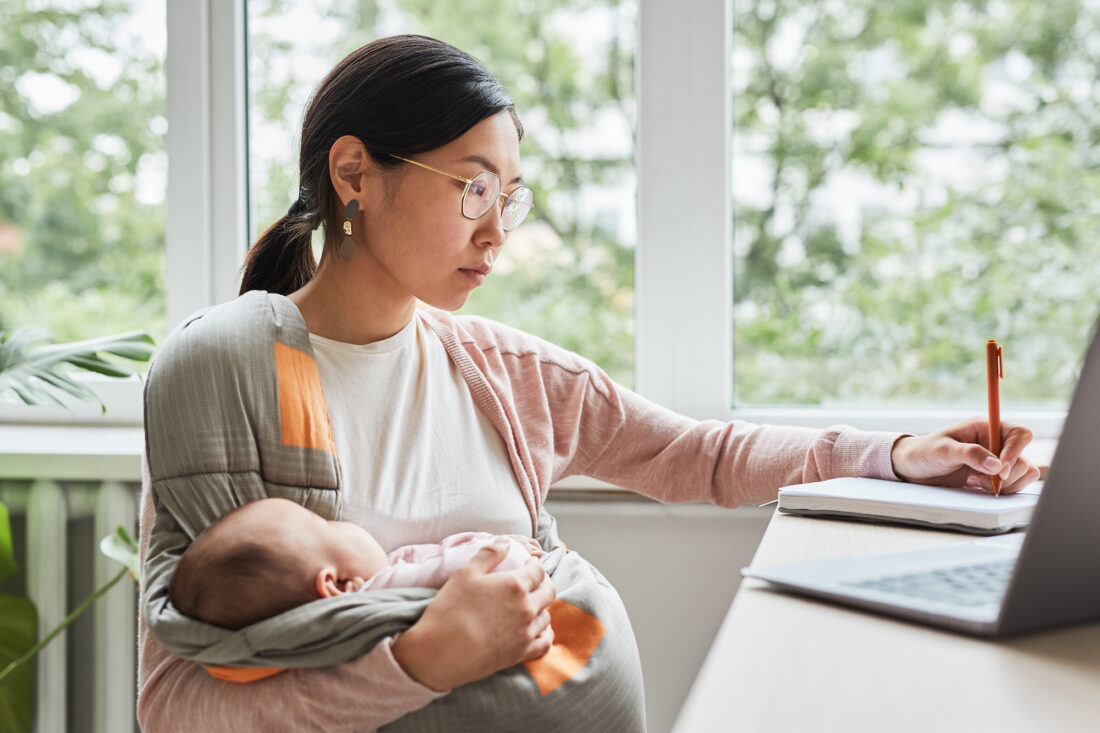
I’ve spoken to working mothers who feel guilty leaving work on time to collect their children from childcare, or taking childcare leave for a medical appointment. A friend once told me it’s hard to explain this to people without kids: you want to be there as your child grows up, not have a stranger witness the milestones first.
My ex-boss once asked why my husband couldn’t take our daughter to her appointments alone. It didn’t occur to him that I might want to be there too. I was on probation at the time. I took the hint and missed the next appointment, trusting my husband to fill me in afterward. But I still felt a sense of loss. Maybe I would have caught a detail he missed, or asked a question he didn’t think to ask.
My ex-boss is a father of three. He’s since admitted he left most of the child-rearing to his wife. He’s from an older generation, and his kids are grown now. In a lot of ways, he could afford to do that. Not every family in Singapore has that luxury.
I’ve also heard from other mothers about colleagues complaining about covering for those on maternity leave.
Years ago, before I was diagnosed with endometriosis, I also experienced how quickly empathy can disappear when someone’s personal circumstances don’t fit neatly into the standard working day.
I understand why resentment happens.
When one person is away, someone else often absorbs the work.
But that’s not a parenting problem.
It’s an organisational problem.
Well-designed workplaces shouldn’t force colleagues to choose between supporting parents and protecting their own wellbeing.
Perhaps we’ve made parenthood feel too difficult
I don’t expect the Government to solve every challenge of raising a child.
Nor do I think every problem can be fixed with another grant.
But I do think we’ve spent years asking why Singaporeans aren’t having more children, when perhaps the more important question is this:
Have we unintentionally made parenthood feel too difficult?
Medical costs.
Housing.
Childcare.
Workplace expectations.
Public attitudes.
Administrative hurdles.
None of these barriers is impossible to overcome on its own.
Together, however, they make parenthood feel like something that has to be perfectly planned and financially optimised before it can even begin.
Children are often described as Singapore’s future.
If that’s true, then every policy, every workplace and every community should be asking the same question:
Are we making parenthood easier or harder?
Until the answer becomes “easier,” asking Singaporeans to have more babies may continue to produce the same result.
References
¹ Department of Statistics Singapore, “Total Fertility Rate 2025,” published 6 May 2026. https://www.singstat.gov.sg/news/total-fertility-rate-2025
² Ministry of Health, “Marriage and Parenthood Schemes.” https://www.moh.gov.sg/managing-expenses/schemes-and-subsidies/marriage-and-parenthood-schemes/
³ Early Childhood Development Agency, “Overview of the Infant and Childcare Subsidy Scheme.” https://www.ecda.gov.sg/parents/preschool-subsidies/infant-and-childcare-subsidy-scheme/overview
4 Ministry of Social and Family Development, “Opening Speech by Minister Masagos Zulkifli at the Second Reading of the Adoption of Children Bill,” https://www.msf.gov.sg/media-room/article/Opening-Speech-By-Minister-Masagos-Zulkifli-At-The-Second-Reading-Of-The-Adoption-Of-Children-Bill; and “Ruling to Award Adoption to Single Man in Same-Sex Relationship,” https://www.msf.gov.sg/media-room/article/Ruling-to-award-adoption-to-single-man-in-same-sex-relationship
Images: Envato


 Melissa Fann
 Trevor Klass


 Martha Lee