Caring for someone you love often begins with something small. Accompanying a parent to a medical appointment. Helping a family member remember their medication. Making arrangements when someone can no longer manage certain daily activities independently.
Over time, these responsibilities can grow. What begins as occasional assistance may become a daily commitment involving medical decisions, financial planning, changes to work schedules and difficult conversations about the future.
For many families, the challenge isn’t a lack of willingness to care. It’s knowing what to expect, where to turn for help and how to manage their own needs alongside those of their loved ones.
Why Singaporeans feel unprepared for caregiving
According to the AIA Live Better Study (Wave 10), released on 5 November 2026, only 20% of respondents who expect to become caregivers feel well prepared for the responsibility. Among current caregivers, just 31% said they felt prepared when they first took on the role.
The study surveyed 1,000 adults in Singapore between 13 and 29 June 2026. Both current and future caregivers identified emotional strain as their leading challenge, at 31% in each group. Financial strain followed, cited by 23% of current caregivers and 28% of future caregivers.
Relationships can be affected too. One in five current caregivers (21%) identified the impact on relationships and social life as a challenge, even though this was not among the five leading concerns of future caregivers.
Caregiving takes place alongside careers, marriages, parenting, friendships and other responsibilities that don’t disappear when someone needs help.

The financial costs aren’t always obvious
AIA found that 26% of future caregivers were unsure how much caregiving would cost, while 22% did not feel financially prepared to set aside the necessary resources.
Costs can extend beyond medical bills to transport, mobility aids, home modifications, professional care and additional household assistance. There may also be lost income when a family member reduces working hours or leaves employment.
Singapore families can explore financial assistance through the Agency for Integrated Care (AIC), including information on the Home Caregiving Grant and the Caregivers Training Grant. Eligibility and assistance amounts vary, so families should check the current criteria rather than assume everyone qualifies.
When caregiving and work compete for attention
Medical appointments may fall during office hours. A loved one’s condition may change unexpectedly. Even when daily care is arranged, somebody must still coordinate appointments, make decisions and manage paperwork.
In AIA’s research, flexible working arrangements were the leading workplace priority for 39% of current caregivers and 38% of future caregivers. Flexibility helps, but it cannot resolve every problem. Clear policies, access to appropriate leave and understanding supervisors matter too.
Disability inclusion: supporting independence alongside care
Not every person with a disability needs continuous care. Many want to work, build relationships, make their own decisions and participate in society. Supporting independence should sit alongside practical help where it is needed.
At its 40th anniversary in November 2026, Bizlink Centre Singapore highlighted the Bizlink Learning Academy, launched in October with programmes expected to expand progressively from 2027. Its planned offerings include vocational training, employment readiness, digital literacy and train-and-place programmes for persons with disabilities.
Such opportunities can support career development and social connections, but training alone is not enough. Employers also need inclusive recruitment, suitable accommodations and ongoing support. A person’s independence can include having the support they need to make meaningful choices.
Serious illness and the need for earlier support
Other households face caregiving responsibilities when a loved one develops a serious or life-limiting illness. Medical decisions, symptom management and future planning can be difficult to navigate.
In October 2026, St Luke’s Hospital and Lien Foundation launched OPAL, a S$2.2 million programme aiming to support more than 1,200 patients over four years by embedding primary palliative care in community healthcare.
Palliative care is not limited to the final days of life. It can help manage symptoms, address emotional and social needs, and support care planning while appropriate treatment continues. The OPAL model brings family physicians together with nurses, medical social workers and counsellors.
The hospital’s media materials describe the experience of Shirley Cocabo and her father-in-law, Mr Lee Kin Swee. Following a dementia diagnosis, Mr Lee enrolled in OPAL in January 2026. According to the hospital, the family received support through care discussions, counselling, medical social work and telephone follow-ups. This is an account supplied by the hospital, not an independently conducted interview.
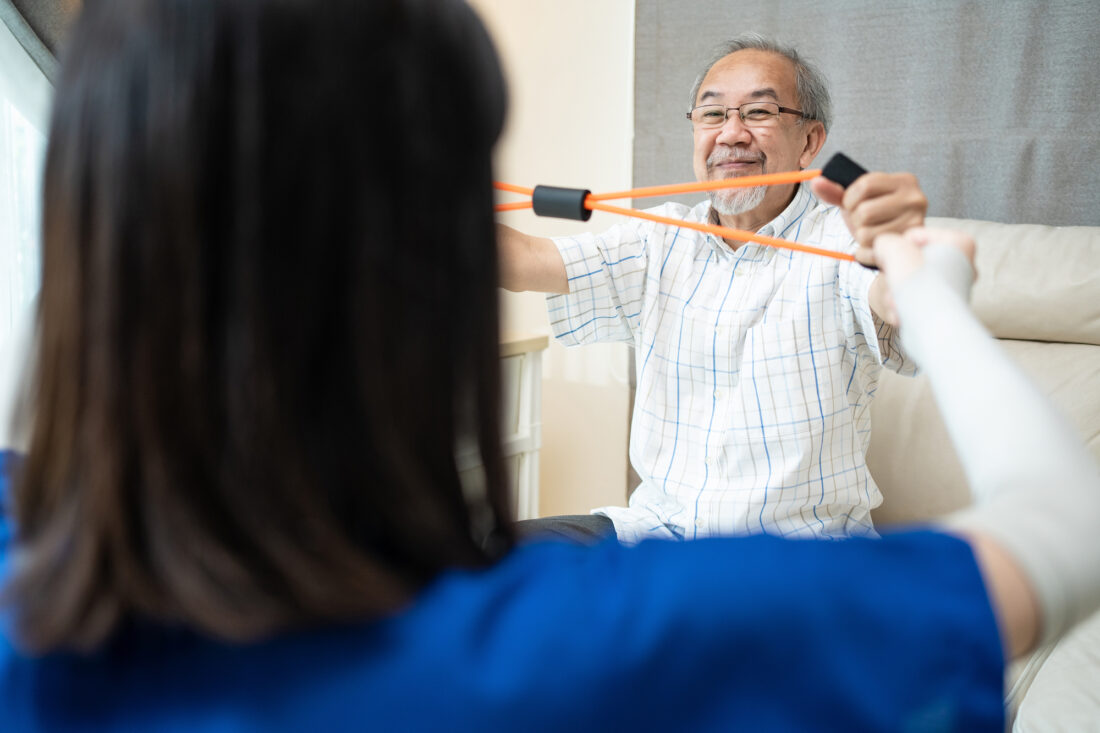
Caregiving doesn’t have to rest entirely on the family
AIA’s study suggests that more families are using shared arrangements. Among current caregivers, 46% had moved beyond exclusively family-led care, while 56% of future caregivers expected to combine family help with external support such as domestic helpers, professional providers or care facilities.
Some caregivers need assistance with physically demanding tasks or medical care. Others need time to work, rest or attend to their own families. Seeking support can be part of responsible planning rather than a failure to care.
Families can explore respite services and other community care options through AIC. The right arrangement depends on the individual’s needs, eligibility, affordability and available services.
Where Singapore caregivers can find support
The first step is to understand the type of help a person actually needs. An older adult recovering from surgery, a person with disabilities seeking employment and someone living with advanced dementia may need very different services.
- Agency for Integrated Care: community care, training, respite and financial assistance information.
- SG Enable: disability services, employment resources and caregiver support.
- Bizlink Centre Singapore: disability employment and skills development programmes.
- St Luke’s Hospital OPAL: primary palliative care information for eligible patients.
- HealthHub: information on advance care planning and discussing future healthcare preferences.
Families may also benefit from discussing responsibilities early: who coordinates appointments, who manages finances and who can step in when the primary caregiver is unavailable. For more on planning ahead, read our guide to advance care planning and lasting powers of attorney in Singapore.
Looking after the person who provides care
Caregiving can bring closeness and connection, but it can also be exhausting. A caregiver may want to provide the best possible support while feeling tired, frustrated or worried about the future. Those feelings can exist together.
For some, the most helpful change is access to professional services. For others, it is a flexible workplace, training, financial assistance or another family member sharing the load. There is no single arrangement suitable for everyone.
As Singapore’s care needs evolve, the question isn’t only whether families are prepared to care. It is also whether they have the information, resources and support to keep doing so without losing sight of their own lives.
Sources: AIA Live Better Study (Wave 10), press release dated 5 November 2026; Bizlink Centre Singapore 40th anniversary press release dated 12 November 2026; St Luke’s Hospital and Lien Foundation OPAL announcement dated 27 October 2026 and accompanying caregiver profile. Study findings and institutional examples are attributed to their respective sources.
Images: Envato and AI-generated


 Melissa Fann


 Trevor Klass