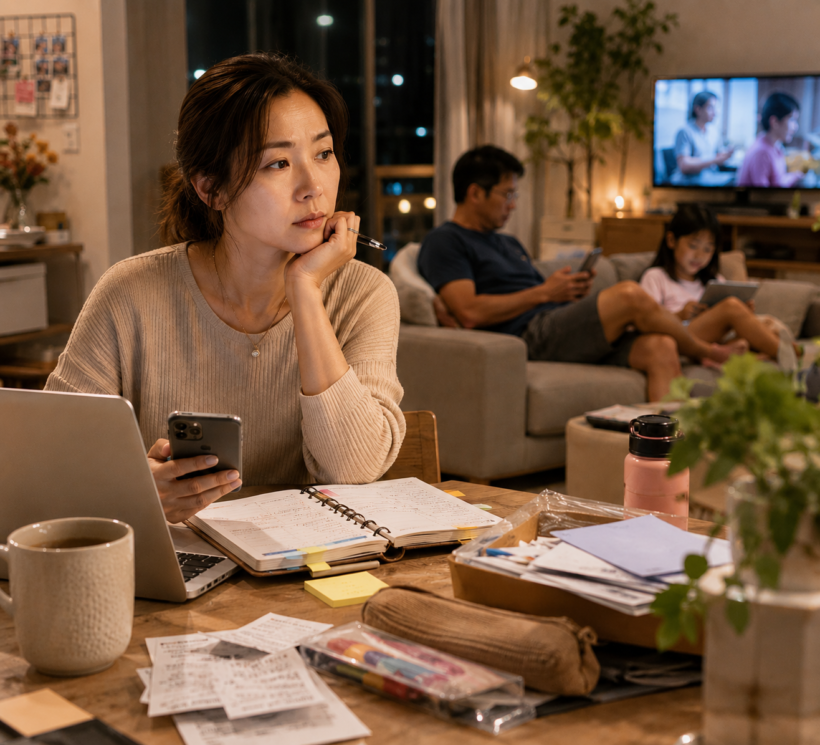

The gap between health advice and daily life is rarely a simple failure of discipline. It is shaped by pain, time, money, work, care and whether our surroundings make action possible.
Most of us do not need another reminder that vegetables are good for us, movement matters and sleep is important. We may even have blood-test results, wearable data and personalised recommendations showing where we should improve. Yet knowing what to do and doing it consistently are very different achievements.
I confronted this after taking a biological age test and writing about whether we can afford to live longer. The results gave me useful information about inflammation and metabolic health, but information was only the beginning. The harder question was whether my ordinary life could accommodate what the advice required.
Why do sensible health recommendations so often collapse between the clinic, the kitchen, the workplace and the end of an exhausting day?
Advice Is Not the Same as Action
Health communication often assumes a direct path: people receive accurate information, understand the consequences and change their behaviour. Real life is less orderly.
Behavioural researchers describe an “intention–behaviour gap”: the distance between deciding to do something and actually doing it. A 2023 systematic review and meta-analysis on physical activity found that 47.6 per cent of people who intended to be active did not translate that intention into action.
Motivation, intention and implementation are not interchangeable. Motivation gives us a reason to act. Intention is the decision to act. Implementation is the practical machinery that allows it to happen: when and where we will exercise; which food is available when we are tired; who will watch the children; whether pain is manageable; and what gets displaced when time runs out.
Techniques known as implementation intentions can help by turning a vague aim into an “if–then” plan: if I finish lunch, then I will walk for ten minutes; if I am too tired to cook the planned meal, then I will use the simpler backup option. Research suggests such plans can improve exercise and healthy-eating behaviour, particularly when people already intend to change and believe they can.
But an if–then plan cannot create money, reduce a person’s workload, remove pain or add two hours to the evening.
Health Advice Meets a Real Body and a Real Schedule
Exercise is a good example. I know regular movement is beneficial. I do not need to be persuaded. However, endometriosis and chronic pain affect what my body can tolerate and when.
On a better day, light exercise may be possible. During a flare, even ordinary movement can require calculation, while pushing through may aggravate symptoms and make the following days harder.
The evidence reflects this complexity. Exercise can improve physical function and may reduce pain severity for some people with chronic pain, but adherence is affected by pain itself, comorbidities, time constraints, psychological factors, social support and whether the activity is personalised.
The appropriate question is not simply, “Why aren’t you exercising?” It is, “What kind of movement is safe, accessible and repeatable in the body and life you have?”
Food presents a similar problem. After being advised to eat more anti-inflammatory foods, the principle made sense. The work began when I had to translate it into family meals while managing work, caregiving, grocery costs, different nutritional needs and days when pain or appointments disrupted the plan.
“Eat more plants and healthy fats” is useful direction. It is not yet dinner.

I used ChatGPT to turn broad dietary advice into practical meal ideas based on foods my family already eats, our health considerations and the amount of cooking I could realistically manage. Its value was not that artificial intelligence knew something no health professional did. It helped with the administrative layer between knowledge and action: generating combinations, adapting meals and reducing the decisions I had to make from scratch.
Technology can support implementation, but it should not replace medical assessment or individualised professional advice. It cannot cook the meal, pay for the ingredients or guarantee that a difficult day will follow the plan.
As we have explored in our coverage of digital wellness overwhelm, tools are most helpful when they reduce cognitive load. When they add dashboards, alerts, targets and guilt, they become another demand.

The Hidden Cost of “Trying Harder”
Time poverty, burnout, caregiving, financial stress and decision fatigue are sometimes discussed as excuses. They are better understood as conditions that change the cost of a healthy action.
Someone working long or unpredictable hours may technically have the same 24 hours as everyone else, but far less control over them. A caregiver may intend to attend a medical appointment, sleep earlier or exercise, then abandon the plan because another person’s needs become urgent. A household under financial pressure may know which foods are more nutritious while still prioritising price, convenience, shelf life and whether everyone will eat them.
Financial scarcity can consume mental bandwidth. Research has found that financial concerns can reduce cognitive performance, while later work has examined how scarcity may leave people with less capacity to resist immediate temptations or manage complex health decisions.
This is one reason wellness can become overwhelming. Every recommendation creates another choice. The advice may be individually reasonable while the combined burden is not.
Our previous feature, “You Can’t Self-Care Your Way Out of a Burnout Culture”, made a related argument: an individual cannot fully compensate for an environment that continually depletes them.
Personal choices still matter. However, responsibility is not the same as control. People make choices within limits set by income, working conditions, health, caregiving duties, food access, social support and public policy.
The World Health Organization describes health as being shaped not only by individual behaviour, but by the conditions in which people are born, grow, work, live and age.
Acknowledging that is not an attempt to remove agency. It is an attempt to understand why agency is easier to exercise in some lives than others.

What Support Could Look Like
Healthcare professionals already work within limited consultation times and systems designed mainly to diagnose, advise and refer. The solution is not to expect every doctor to manage the rest of a patient’s life, but to build better bridges between recommendation and implementation.
That could mean care plans that account for pain fluctuations; affordable access to dietitians, physiotherapists and preventive services; clearer referral pathways to community programmes; and follow-up that asks not only whether the patient complied, but what made the plan difficult.
Workplaces also influence whether health advice is realistic. A company may offer a wellness webinar while maintaining workloads that make lunch breaks, medical appointments and adequate rest difficult. Organisational research, particularly in healthcare settings, suggests that changes to working conditions and job design can reduce burnout; stronger interventions change aspects of the environment producing the strain rather than merely teaching workers to cope better.
Communities matter too. A walking group, shared childcare arrangement or affordable exercise programme may sound modest compared with precision medicine, but such support can make behaviour repeatable. Social prescribing, which connects people with non-clinical community resources, is promising in concept, although reviews show mixed evidence.
Technology should serve the same purpose: fewer decisions, clearer next steps and advice adapted to the person’s constraints. It is more useful when it helps someone build a manageable shopping list than when it produces another idealised score.

Healthy Ageing Is Partly a Design Problem
The language of healthy ageing often focuses on discipline: exercise, diet, sleep, stress management and screenings. All are reasonable. None happens in isolation.
Sustainable Ambition asks how we can pursue meaningful goals without repeatedly sacrificing the person pursuing them. The same principle applies to health. A routine that works only during calm weeks, pain-free days or periods of unusually high motivation is not yet sustainable.
Healthy ageing is not simply the accumulation of correct decisions. It is the gradual design of a life in which those decisions require less friction.
Sometimes that design is personal: keeping a simpler meal available for difficult evenings, choosing movement that can be adjusted during pain flares or reducing the number of health goals pursued at once. Sometimes it is relational: sharing domestic work, asking for practical help or building habits around family and friends. Sometimes it is institutional: predictable working hours, accessible healthcare, safer neighbourhoods and policies that give people more control over their time.
The more useful question may not be, “Why can’t I make myself do this?”
It may be, “What keeps making this difficult, and what could be changed so that the healthier option becomes easier to repeat?”
That shift does not promise perfect habits. It offers something more realistic: fewer barriers, better support and a greater chance that the knowledge we already have can finally become part of how we live.
Images: Envato


 Melissa Fann


 Trevor Klass
 Guest Contributor