
Part of The Parent’s Playbook, a series helping parents make considered decisions about children’s sports, movement and active lifestyles.
How to Know When to Encourage Perseverance—and When to Move On
At some point, many parents hear the words:
“I don’t want to go anymore.”
Sometimes this happens in the car just before training. Sometimes it follows a poor performance, an argument with a teammate or several weeks of growing reluctance.
For parents, the statement can set off several competing worries. Are they allowing their child to give up too easily? Should they insist that commitments must be honoured? Will letting them stop teach them to walk away whenever something becomes difficult?
But there is another possibility: the child may be trying to communicate that something is genuinely wrong.
Deciding whether a child should continue a sport is rarely as simple as choosing between perseverance and quitting. A child who is discouraged after one difficult lesson is in a different situation from one who has been anxious for months, repeatedly injured or humiliated by a coach.
The more useful question is not simply, “Should I let my child quit?” It is:
What is making my child want to stop, and what response would best support their wellbeing and long-term relationship with physical activity?
There may not be one correct answer. Parents can, however, slow the decision down, look for patterns and ask better questions before deciding what should happen next.
In this article
- Why your child may want to quit
- Questions to ask before deciding
- When to encourage perseverance
- When stopping may be healthier
- Should children finish the season?
- Is it the sport or the environment?
- Helping your child choose what comes next
- Frequently asked questions
“I don’t want to go” can mean many different things
Children leave sports for a wide range of reasons. Research on youth sport participation has linked continued involvement or withdrawal to factors including enjoyment, confidence, perceived ability, relationships with coaches and teammates, training demands, injuries, family support and competing priorities.
A child may want to stop because:
- the activity has become more difficult;
- they are not progressing as quickly as they expected;
- they feel less capable than the other children;
- the novelty has worn off;
- they are physically or mentally tired;
- they do not like the coach’s approach;
- they feel excluded by teammates;
- they are being bullied or mocked;
- they are embarrassed about making mistakes;
- competitions make them anxious;
- they are afraid of disappointing their parents;
- another interest has become more important;
- schoolwork and other commitments are taking up more time; or
- the family schedule has become too demanding.
These reasons are not interchangeable. Some suggest a temporary obstacle that a child may benefit from working through. Others point to an environment that should be changed or left.
Age matters too. A five-year-old who loses interest after six lessons does not understand commitment in the same way as a 15-year-old who asked to join a competitive team and agreed to complete a season. Even then, older children should not be expected to endure unsafe or harmful conditions simply because they made an earlier commitment.

Look for the pattern, not only the complaint
One difficult session does not necessarily mean that the sport is wrong for the child. Neither does one good session prove that everything is fine.
Pay attention to what happens over time.
| What you notice | What it may suggest |
|---|---|
| Reluctance before a difficult lesson, followed by enjoyment afterwards | Normal resistance or temporary frustration |
| “I’m no good at this” after moving to a higher level | Loss of confidence or fear of comparison |
| Complaints focused on one coach, teammate or training group | A problem with the environment rather than the sport |
| Persistent dread, tearfulness, sleep disruption or physical complaints around training | Anxiety, excessive pressure or an unsafe experience that needs closer attention |
| Constant fatigue across sport, school and home life | An overloaded schedule or inadequate recovery |
| Loss of enthusiasm for a sport they previously loved, together with exhaustion and declining performance | Possible burnout |
| Interest in playing casually but refusal to compete | A poor fit with the current level or format rather than the activity itself |
| Repeated pain or recurring injury | A health issue that should be assessed, not treated as a discipline problem |
Sports burnout is more than occasional boredom. The American Academy of Pediatrics describes it as involving physical or emotional exhaustion, a reduced sense of accomplishment and a growing devaluation of the sport. Possible warning signs include fatigue, chronic muscle or joint pain, declining performance, personality changes and a loss of enthusiasm.
Parents do not need to diagnose burnout themselves. The point is to recognise when reluctance has become persistent enough to require more than another pep talk.
Do not make the decision in the car before training
The minutes before a lesson are rarely the best time for a serious discussion. The child may already be anxious, the parent may be rushing, and both are likely to be focused on the immediate problem of whether to go inside.
The same applies immediately after a poor competition or upsetting session. Strong emotions can make a temporary feeling sound like a final decision.
Unless there is an immediate safety or injury concern, acknowledge what the child has said without settling the entire issue there and then.
A parent might respond:
“I can see that you really don’t want to go today. We don’t have to decide everything right now, but I want to understand what has been happening. Let’s talk properly when we’re both calmer.”
Choose a neutral time when the child is not preparing for training, exhausted after school or worried about how the parent will react.
Younger children may find it easier to talk while drawing, playing or travelling somewhere unrelated to sport. Teenagers may speak more openly when the conversation feels less like an interrogation.
Questions worth asking
Begin with curiosity rather than persuasion. A child who expects to be told that they are lazy, ungrateful or wasting money may give the quickest answer available instead of the most honest one.
Useful questions include:
- What do you not enjoy about it now?
- When did you first start feeling this way?
- Is it the sport itself, or is something else happening there?
- What part do you still enjoy?
- Is there anyone at training who makes you uncomfortable?
- Do you feel safe making mistakes?
- Are you worried about competitions, the coach or the other children?
- Does your body hurt during or after training?
- Are you tired because of the sport, or tired in general?
- If one thing could change, what would it be?
- Would you still enjoy the sport without competitions?
- Would you prefer another class, coach or team?
- Are you worried about disappointing someone?
- Do you want to stop completely, or do you need a break?
Avoid asking every question in one sitting. The aim is to create space for the child to explain, not to cross-examine them until they produce an answer.
Parents should also consider what the child may be reluctant to say. A child may claim that a sport is “boring” because it feels safer than admitting that they are being excluded, frightened or constantly compared with others.

When encouragement may be the better option
Not every desire to quit should lead to an immediate withdrawal.
Sport naturally includes periods of frustration. Children may struggle when learning a difficult skill, moving into a more advanced group, returning after an injury or competing for the first time. A disappointing match or failed assessment can temporarily damage confidence.
In these situations, encouragement may help the child discover that discomfort can be tolerated and that ability can improve with practice.
Continuing for a little longer may be reasonable when:
- the reluctance began after one specific setback;
- the child remains happy during most sessions;
- they still talk positively about parts of the sport;
- the environment appears supportive and safe;
- their physical and emotional distress is mild and short-lived;
- they want to improve but are afraid that they cannot; or
- a practical change could make participation more manageable.
Encouragement does not have to mean insisting that nothing changes. Parents could:
- speak to the coach about a recent loss of confidence;
- reduce the number of weekly sessions;
- move the child into a less competitive group;
- agree on a small, realistic goal;
- take the focus away from results;
- allow a short recovery period;
- arrange a trial lesson with another coach; or
- agree to review the situation after a defined period.
For example:
“Let’s try the next four sessions with one change: you’ll move to the recreational group. After that, we’ll talk again and decide whether it feels any better.”
This gives the child an opportunity to work through a manageable difficulty without making them feel trapped indefinitely.
Research suggests that enjoyment, perceived competence and supportive coaching are associated with continued participation. Coaching styles that allow children some autonomy tend to be more protective than highly controlling environments.
The lesson is not that children must always push through. It is that a temporary loss of confidence should not automatically be mistaken for a permanent loss of interest.
When stopping may be the healthier choice
There are circumstances in which continued attendance is unlikely to build useful resilience.
Stopping, changing programmes or taking a break may be appropriate when there is:
- persistent anxiety before training or competitions;
- bullying, exclusion, harassment or hazing;
- humiliation, threats or emotionally abusive coaching;
- pressure to train through pain or injury;
- recurring or worsening injuries;
- chronic exhaustion;
- a prolonged and complete loss of enjoyment;
- a level of training that interferes with sleep, school or basic recovery;
- intense fear of making mistakes;
- a family schedule or financial commitment that has become unsustainable; or
- no meaningful improvement after reasonable changes have been attempted.
A strict coach is not automatically an abusive coach. Children may sometimes dislike being corrected, held to rules or asked to concentrate. The distinction lies in how authority is used.
A coach can be demanding while remaining respectful. Repeated humiliation, intimidation, degrading comments, physical punishment, threats or retaliation for raising concerns are not necessary parts of sporting discipline.
Singapore’s Safe Sport Unified Code recognises physical and psychological misconduct, sexual misconduct and other inappropriate conduct as safeguarding concerns within sporting environments. Anyone who is aware of conduct that may breach the code can approach the sporting organisation’s safeguarding officer or report the concern to the Safe Sport Commission.
When safety is in question, parents do not need to make a child complete several more sessions to prove that the problem is serious. Remove them from the immediate situation first, document what they have said and decide separately whether the matter should be reported.
Persistent pain or repeated injury also deserves proper assessment. A child should not be accused of lacking commitment when their body may be signalling that something is wrong.
Beware the sunk-cost trap
Parents may find it especially difficult to let a child leave after paying for equipment, uniforms, competition fees or a full term of lessons.
The thought is understandable:
“We’ve already spent so much. You can’t stop now.”
This is an example of the sunk-cost fallacy: allowing resources that have already been spent, and cannot be recovered, to determine what should happen next.
Past spending is relevant when planning future activities, but it does not automatically make continued participation the best decision. Paying for another three months of an unsuitable programme does not recover the money spent on the first three months.
A more useful question is:
Knowing what we know now, would we choose to spend the next month’s time, money and energy on this activity?
The answer may still be yes. Perhaps the child is facing a short-term difficulty and wants support to continue. But if the main reason for staying is that the fees were expensive, the family may be protecting the investment rather than the child’s wellbeing.
There may be practical ways to reduce the financial loss. Ask whether lessons can be deferred, transferred, converted to recreational sessions or credited towards another programme. Equipment may be resold, passed to a sibling or kept until the child has had time to reconsider.
Parents choosing future activities can also reduce the pressure by starting with trials, community programmes, shorter terms or rented and second-hand equipment. This is one reason it can help to approach the process of finding a sport your child enjoys without making a large financial commitment too early.
Should children finish what they have started?
“Finish the season” is often presented as a universal family rule. It can be useful, but only when applied with judgement.
Completing a reasonable commitment may teach children that their decisions affect teammates, coaches and family members. It can also prevent a child from making a permanent decision in response to one difficult week.
Finishing the term or season may be reasonable when:
- the child is safe;
- their distress is manageable;
- the commitment is short and clearly defined;
- the child had some say in joining;
- leaving immediately would significantly affect a small team;
- the coach is willing to make reasonable adjustments; and
- there is a firm end date rather than an open-ended demand to continue.
It may not be reasonable when:
- the child is being harmed or bullied;
- training is worsening an injury;
- their anxiety is persistent or severe;
- the remaining commitment is lengthy;
- the programme has changed substantially since the family signed up;
- adults are using guilt or threats to secure attendance; or
- the child had little genuine choice about joining in the first place.
A six-week introductory class is different from a year-long competitive programme. A recreational swimmer leaving mid-term affects others differently from a goalkeeper leaving a team immediately before a tournament.
Age should also influence expectations. Younger children can be taught about commitment through short, concrete agreements:
“We signed up for four lessons. Unless you feel unsafe or unwell, we’ll attend those four and then decide whether to continue.”
Older children can be included in a fuller discussion about teammates, notice periods and how to communicate their decision respectfully.
Honouring commitments is valuable. It should not become a principle that overrides health, safety or all changing circumstances.
Is it the sport, the format or the environment?
Before concluding that a child dislikes the activity itself, separate the sport from the way they are currently experiencing it.
A child may dislike competitive swimming but enjoy swimming recreationally. They may struggle in a large football academy but thrive in a smaller group. They may prefer individual progress over team selection, or find solo training lonely and want more social interaction.
This is where understanding the difference between team sports and individual sports can be useful. The child may not need to abandon physical activity; they may need a setting that better suits their temperament, confidence and reasons for participating.
Consider whether the problem might be improved by changing:
- the coach;
- the class timing;
- the training frequency;
- the team or training group;
- the level of competition;
- the balance between practice and competition;
- the emphasis on results;
- the social environment; or
- the sport itself.
Do not assume that a prestigious academy or highly competitive programme is automatically the best environment. The right programme is one in which the child can learn, remain safe and retain a reasonable sense of ownership over their participation.

Quitting one sport does not mean quitting movement
Parents sometimes fear that allowing a child to leave one activity will lead to a completely inactive lifestyle.
It does not have to.
Organised sport is only one way to be physically active. Movement can include cycling, hiking, climbing, dance, skating, active play, martial arts, recreational swimming or informal games with friends.
The World Health Organization recommends that children and adolescents aged five to 17 average at least 60 minutes of moderate-to-vigorous physical activity a day across the week. That activity does not need to come from one organised sport.
A child who leaves a competitive programme could:
- try another sport;
- move from competitive to recreational participation;
- join a school or community activity;
- explore outdoor adventure activities;
- take an agreed break before choosing something new; or
- stay active informally while deciding what they enjoy.
Parents do not need to enrol the child in a replacement activity the following day. A short break may help reveal whether the child misses the sport, feels relieved without it or becomes interested in something else.
Trying several activities during childhood is not necessarily a sign of poor commitment. For many children, sampling different sports helps them discover what type of movement, social setting and challenge they actually enjoy. The American Academy of Pediatrics has advised against premature specialisation in most sports because intensive, year-round participation can increase the risks of overuse injuries, stress and burnout.
What children can learn from leaving
Perseverance is not the only lesson available in sport.
A thoughtful decision to leave can also help a child learn:
- how to recognise their own physical and emotional limits;
- how to explain a difficult experience;
- how to distinguish a challenge from an unsuitable environment;
- how to set boundaries;
- how to take responsibility for a decision;
- how to communicate respectfully with coaches and teammates; and
- how to change direction without treating the previous experience as wasted.
This is different from automatically leaving whenever something becomes uncomfortable.
The distinction lies in the process. Did the child reflect on what was happening? Did the family explore reasonable changes? Could the child explain what they wanted and why? Did they consider any commitments to others? Was the final decision proportionate to the problem?
A child can leave responsibly. They might finish an agreed short period, thank the coach, return borrowed equipment and explain the decision without blaming teammates.
They may also recognise later that they made the wrong decision and choose to return. Changing one’s mind is not evidence that the earlier conversation was pointless. It is part of developing judgement.
How parents can respond without adding more pressure
Listen before offering a solution
Children are more likely to explain what is wrong when they do not have to defend their feelings. Reflect back what you have heard before deciding whether you agree.
“It sounds as though you still like playing, but competitions have started making you dread the whole week.”
This is more useful than immediately saying, “You’ll regret quitting.”
Avoid guilt about money and sacrifice
Parents may have rearranged work, travelled across Singapore or paid substantial fees. Those sacrifices are real, but making a child responsible for an adult’s financial disappointment can prevent honest communication.
Discuss costs as part of future family planning, not as evidence that the child owes continued participation.
Speak to the coach when appropriate
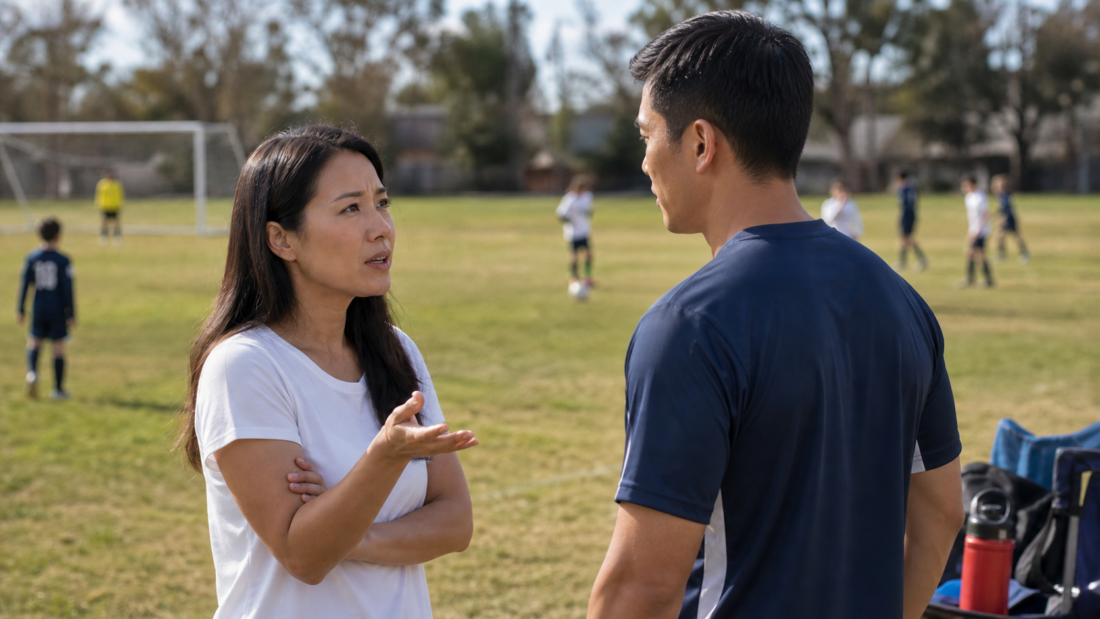
A good coach may have noticed changes in the child’s confidence, friendships or performance. Ask open questions rather than beginning with an accusation.
For example:
“We’ve noticed that she has become very anxious before training. Have you seen any changes in the group or in how she responds during sessions?”
Do not require the child to confront a coach alone, particularly when the child has described humiliation, intimidation or other unsafe behaviour.
Do not compare them with siblings or friends
Another child’s willingness to train harder does not explain what is happening here. Comparisons often turn the issue into a judgement about character rather than an attempt to understand the situation.
Separate effort from results
A child may have worked hard and still be poorly suited to a sport, coach or competitive level. Recognise their effort without using it as another reason they must continue forever.
Make the next decision clear
Once the family has decided, avoid leaving the child in continuous uncertainty.
Explain whether they are:
- attending until a specified date;
- taking a defined break;
- moving to another class;
- stopping immediately for safety or health reasons; or
- trying one agreed change before reviewing the decision.
A review date is often more reassuring than “we’ll see”.
A practical decision framework
When the answer is unclear, work through five questions.
1. Is the child safe?
Consider bullying, degrading coaching, harassment, injury and pressure to train through pain. Safety concerns take priority over lessons about perseverance.
2. How long has the problem lasted?
One bad afternoon and three months of dread should not be treated as equivalent.
3. Does the child dislike the sport or the current experience?
A different coach, level, team or recreational format may change the answer.
4. Is there a manageable change worth testing?
Agree on one or two changes and a clear review date. Do not repeatedly move the deadline if the child remains persistently unhappy.
5. What choice supports future movement?
The immediate goal is not to keep the child enrolled at any cost. It is to help them develop enough confidence and self-knowledge to remain active in ways that are sustainable.
The goal is not simply to produce a child who never quits
Resilience is sometimes described as the ability to keep going. That is only part of it.
Children also need to learn how to recognise harmful situations, adapt their plans, recover from setbacks and make considered decisions when circumstances change.
Sometimes resilience means returning to training after a disappointing competition.
Sometimes it means asking for help.
Sometimes it means changing coaches, reducing the level of competition or admitting that a once-loved activity no longer fits.
Parents do not need to choose between raising a child who perseveres and protecting a child who is unhappy. The more demanding task is to understand what kind of difficulty the child is facing and respond in proportion to it.
The long-term aim is not loyalty to one sport. It is a child who can approach movement with confidence, communicate honestly about their experiences and make increasingly responsible choices about their own wellbeing.
Frequently asked questions
Is it okay for my child to quit a sport?
Yes. Leaving a sport is not automatically a failure or evidence of poor character. The reason, timing and decision-making process matter. Parents should first explore whether the child is facing temporary frustration, a loss of confidence, burnout, injury, bullying or a poor fit with the coach or programme.
Should children finish the season before quitting?
Finishing a season can teach children to honour reasonable commitments, particularly when they joined voluntarily and teammates are relying on them. It should not be required when the child is unsafe, injured or experiencing serious and persistent distress. Consider the child’s age, the length of the remaining commitment and the effect on others.
How do I know whether my child is simply being lazy?
“Lazy” is rarely a useful diagnosis. Look at the child’s behaviour across different settings. Are they avoiding all effort, or only this particular activity? Do they enjoy the session once it begins? Are they tired, anxious, discouraged or struggling socially? The pattern usually tells parents more than the label.
Should I force my child to attend training?
For occasional reluctance, it may be reasonable to maintain the usual routine and attend. Repeatedly forcing a highly distressed child to participate without investigating the cause can overlook anxiety, bullying, injury or an unsuitable coaching environment. Safety and persistent distress should be addressed before attendance is enforced.
What if we have already spent a lot of money?
Money already spent cannot be recovered by keeping a child in an unsuitable programme. Consider future costs and wellbeing separately from past spending. Ask whether lessons can be deferred, transferred or converted, and whether equipment can be resold or reused.
What if my child wants to switch sports every year?
Trying several sports can be a normal part of childhood, especially before a child has found an activity and environment they enjoy. Parents can control costs and encourage responsibility by using trial classes, setting short agreed commitments and avoiding expensive specialised equipment too early.
How can I tell whether the problem is the coach or the sport?
Ask what the child enjoys when playing informally, at school or with a different instructor. If they still like the activity but dread one class, coach or team, the environment may be the main issue. A trial with another programme can help clarify the difference.
References
American Academy of Pediatrics, Organized Sports for Children, Preadolescents, and Adolescents
American Academy of Pediatrics, Sports Specialization and Intensive Training in Young Athletes
Zhang et al., Why Do Students Drop Out of Regular Sport in Late Adolescence? The Experience of a Systematic Review
Safe Sport Commission Singapore, Safe Sport Unified Code
World Health Organization, Guidelines on Physical Activity and Sedentary Behaviour
Images: Envato


 Melissa Fann

 Guest Contributor

 Luke Elijah
 Natasha Mitter



1 comment