Part of The Parent’s Playbook, a series helping parents make considered decisions about children’s sports, movement and active lifestyles.
“Should my child play a team sport or an individual sport?”
It is a question many parents ask when their child is ready to begin an organised activity. Perhaps their classmates are joining football, relatives have recommended swimming or you are trying to decide which trial class is worth committing to.
There is no universally correct answer.
Team and individual sports create different experiences, but neither is automatically better for a child’s confidence, development or future health. The quality of the coaching, the level of pressure, the relationships within the activity and the child’s own interests may matter just as much as the type of sport.
The more useful question is:
Where is my child most likely to feel confident, appropriately challenged and motivated to return?
That may be a football pitch where they learn to cooperate with teammates. It may be a swimming pool where they can focus on improving their own technique. It may also change as your child grows.
The aim is not to assign every child a sporting identity as early as possible. It is to help them find forms of movement that they enjoy, can realistically sustain and may want to carry into later life.
In this guide
- How team and individual sports differ
- What children may gain from team sports
- The challenges of team sports
- What children may gain from individual sports
- The challenges of individual sports
- Which environment may suit your child
- Which sports may suit shy children
- Whether children can benefit from both
- How age and development affect the choice
- Why the coach matters
- Practical considerations for families
- How to tell whether the sport is working
- What to do if your child wants to stop
- Which type of sport builds confidence
- Which type of sport burns more energy
- What success in children’s sport really looks like
- Frequently asked questions
Team sports and individual sports are different environments
The distinction between team and individual sports is not always as clear as it first appears.
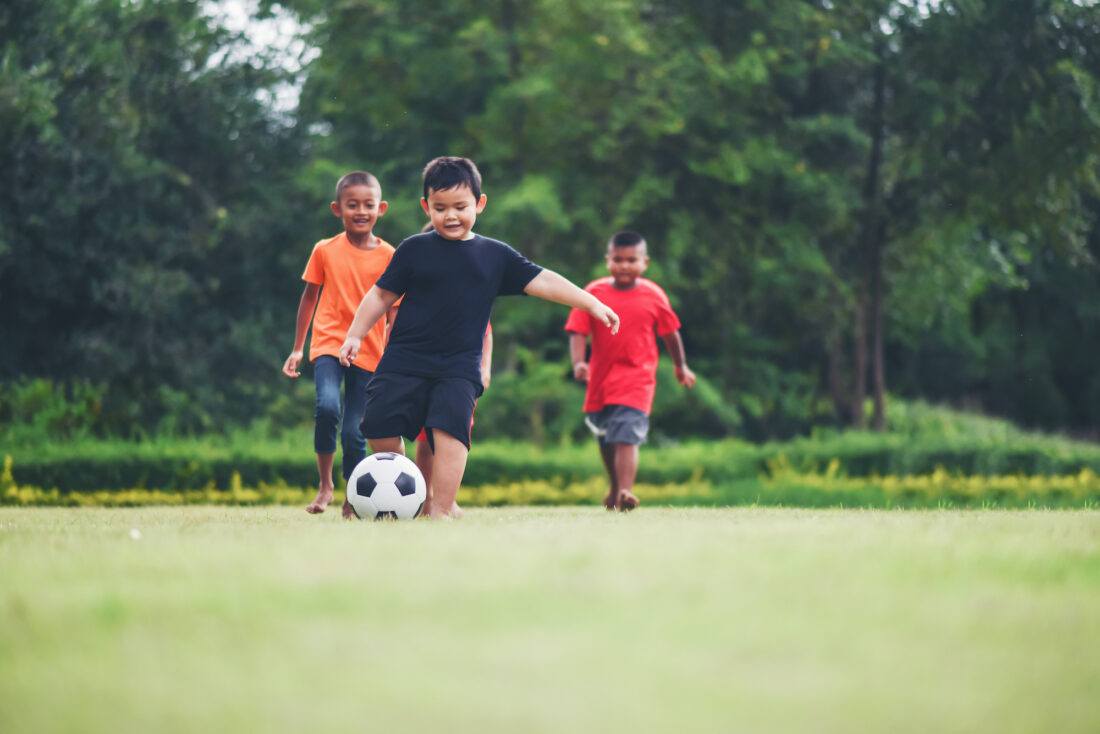
In team sports, players generally work towards a shared result. Success depends on how well they communicate, coordinate and respond to one another.
Common examples include:
- Football
- Basketball
- Volleyball
- Rugby
- Hockey
- Dragon boating
- Netball
- Baseball
Individual sports place greater emphasis on a child’s own performance, technique or progression.
Examples include:
- Swimming
- Athletics
- Gymnastics
- Singles tennis
- Martial arts
- Climbing
- Golf
- Archery
- Figure skating
However, few sports are entirely social or entirely individual.
A swimmer may train every week with the same squad. Gymnasts may practise alongside teammates and represent the same club. Martial arts students often support one another during lessons. Tennis players may compete individually but train with partners.
Similarly, a child in a football team still needs individual discipline, technical ability and personal responsibility.
It is therefore more helpful to think about what the sporting environment asks of your child than to rely only on the team-versus-individual label.
Does the child need to make rapid decisions with others? Are they expected to practise independently? Is progress measured through a team result, an individual score or personal improvement? How much interaction takes place during training?
These questions reveal more about the experience your child will have.
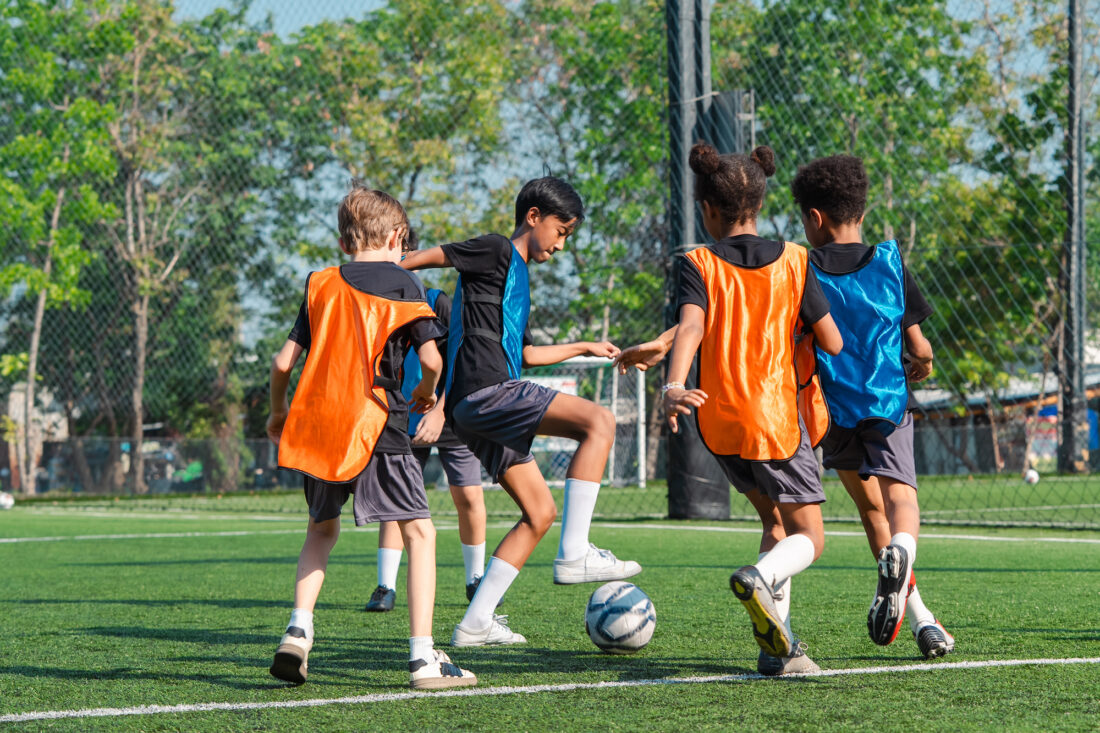
What children often gain from team sports
Team sports give children repeated opportunities to interact, communicate and work towards something they cannot accomplish alone.
Research generally links youth sport participation with positive psychological and social outcomes, including stronger self-esteem, a greater sense of belonging and better interpersonal skills. Some reviews have found that the social benefits are particularly consistent in team sports, although results vary according to the child, context and quality of participation.
These benefits are not automatic. Simply enrolling a child in football or basketball does not guarantee confidence or friendship. The culture created by coaches, parents and teammates makes a significant difference.
Communication becomes necessary, not theoretical
During a game, children need to call for the ball, listen to instructions, warn teammates, respond to mistakes and adjust their behaviour quickly.
They may need to communicate with children who have different temperaments and skill levels. One teammate may be vocal and assertive, while another needs more encouragement.
Over time, children can learn that effective communication is not just about speaking loudly. It also involves listening, reading a situation and understanding what others need.
Children experience shared responsibility
In a team sport, one player rarely controls the entire result.
A child may play well and still lose. They may make a mistake, only for a teammate to help recover the situation. They may also have a quiet game while somebody else leads the team.
This can help children understand that responsibility is shared. Their contribution matters, but they are not solely responsible for every outcome.
For children who are highly self-critical, that shared responsibility may reduce some of the personal weight attached to competition. For others, it can be frustrating to depend on teammates whose effort or ability they cannot control.
Both reactions provide useful information about the environment your child finds motivating.
Different roles become visible
Team sports can show children that contribution does not always look the same.
The person who scores may attract the most attention, but a defender, goalkeeper, playmaker or supportive teammate can be just as important. Children begin to see that groups need people with different strengths.
This can be valuable for children who are not naturally dominant or who do not immediately stand out as the strongest player. A thoughtful coach can help them recognise where they contribute rather than allowing the sport to revolve around a small number of high performers.
Friendships can make participation more enjoyable
Some children are more motivated to attend training because their friends are there.
Regular sessions, shared goals and time spent recovering from wins and losses can create a sense of belonging. A child who feels disconnected at school may find a separate community through sport.
However, parents should avoid assuming that being surrounded by other children automatically means a child feels included. Team cultures can also involve cliques, exclusion and comparisons.
Ask your child not only whether they have made friends, but also whether they feel comfortable being themselves around the team.
Setbacks become collective experiences
Team sports expose children to dropped passes, missed goals, defeats and disagreements. These moments can help them learn how to recover after disappointment.
A healthy team environment teaches children that mistakes are expected and repair is possible. Players regroup, adjust and continue.
Resilience does not come simply from losing, however. It develops when children receive enough support to process what happened, try again and see that one performance does not define them.
The possible challenges of team sports
The same features that make team sports rewarding can also make them difficult.
Playing time may be uneven
In competitive settings, stronger or more experienced players may receive more time on the court or pitch.
For a child who spends most matches on the bench, belonging to a team may not feel particularly inclusive. They may attend every training session without receiving enough opportunity to practise under real game conditions.
Before enrolling, ask the coach how playing time is managed, particularly for younger or less experienced participants.
A development-focused programme should have a clear answer. Winning may matter, especially at higher competitive levels, but children still need meaningful opportunities to participate and improve.
Performance comparisons are visible
Children can easily see who scores most often, who starts each match and who receives the coach’s praise.
Some find this motivating. Others become preoccupied with where they rank.
Parents can reduce unhelpful comparison by asking about decisions, effort and learning rather than goals scored or whether their child was “the best”.
Questions such as “What did you notice during the game?” or “What felt easier than last week?” encourage reflection without pretending that performance does not matter.
Peer dynamics can become stressful
Team membership may bring pressure to conform, fear of disappointing others or anxiety about making mistakes in public.
A child who is still developing confidence may worry that one poor decision will let the whole team down. A very competitive teammate or coach can intensify that feeling.
This does not mean anxious or sensitive children should avoid team sports. A patient, well-managed team can help them become more secure. The issue is whether the environment gives them room to learn without humiliation.
Children cannot control their teammates
Some children struggle when their effort is not matched by others. They may become frustrated if teammates miss training, ignore instructions or make repeated mistakes.
Learning to cooperate with people they cannot control is valuable, but it can also reduce enjoyment.
The question is not whether your child ever feels frustrated. Frustration is part of sport. The question is whether they are learning to manage it or becoming increasingly resentful and unhappy.
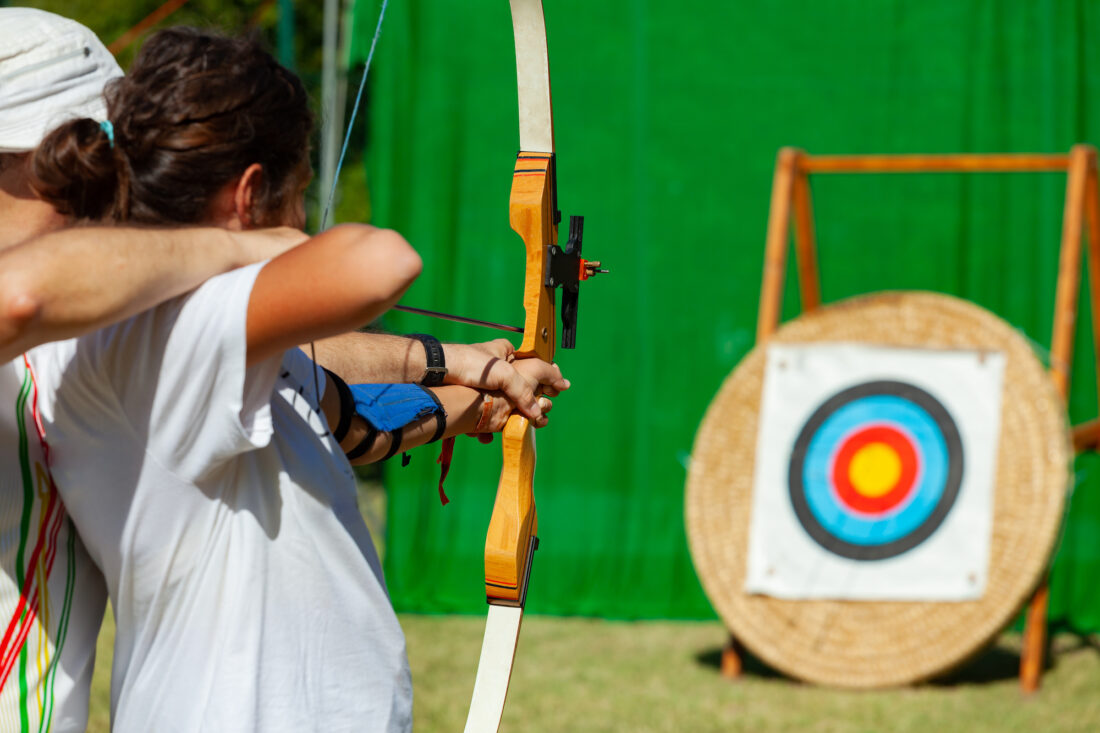
What children often gain from individual sports
Individual sports give children clearer ownership over their progress.
They may work towards swimming a faster time, completing a climbing route, improving a gymnastics sequence or earning the next martial arts grade.
The connection between practice and improvement can feel more direct. Children often receive immediate feedback about what they can do now that they could not do before.
Progress can feel personal and measurable
Many individual sports allow children to compare their current performance with their own previous efforts.
A swimmer may reduce their lap time. A climber may complete a route that once felt impossible. A martial arts student may perform a technique with greater control.
This can help children understand that improvement does not always mean defeating somebody else.
For children who dislike constant comparison with peers, personal targets may feel more manageable and motivating.
That said, individual sports still involve rankings, scores, grades and competition. Personal progress does not remove comparison entirely, particularly at more advanced levels.
Children learn personal accountability
When performance is individual, children have fewer places to redirect responsibility.
They begin to see how preparation, concentration and regular practice influence their results.
This can build accountability, but it needs to be introduced carefully. A disappointing result may reflect nerves, fatigue, injury, unrealistic expectations or many other factors. It should not automatically become evidence that a child “did not work hard enough”.
Personal responsibility is healthiest when it includes reflection and problem-solving, not blame.
Independent focus can become a strength
Individual activities often require sustained attention to technique, timing, breathing or body position.
Children learn to notice small details and persist through repetition. This may suit those who enjoy quiet concentration or the satisfaction of mastering a specific skill.
For some children, the relative predictability is reassuring. They know what they are practising and can focus without having to interpret several teammates at once.
Progress may be more flexible
Children in individual sports may be able to advance according to their own readiness rather than the performance of an entire team.
A coach can adjust drills, distances or difficulty levels for each participant. This can help children who develop at a different pace from their peers.
However, flexibility varies widely between programmes. Some classes group children rigidly by age or competitive level, while others offer more individualised instruction.
Parents should look beyond the sport itself and ask how the particular school or coach manages progression.
Success can build self-trust
Completing a difficult movement or improving after sustained practice can give children a sense of earned confidence.
They see that they can tolerate frustration, make adjustments and eventually do something they once could not.
This is different from praise-based confidence. It comes from evidence: the child has experienced their own capacity to learn.
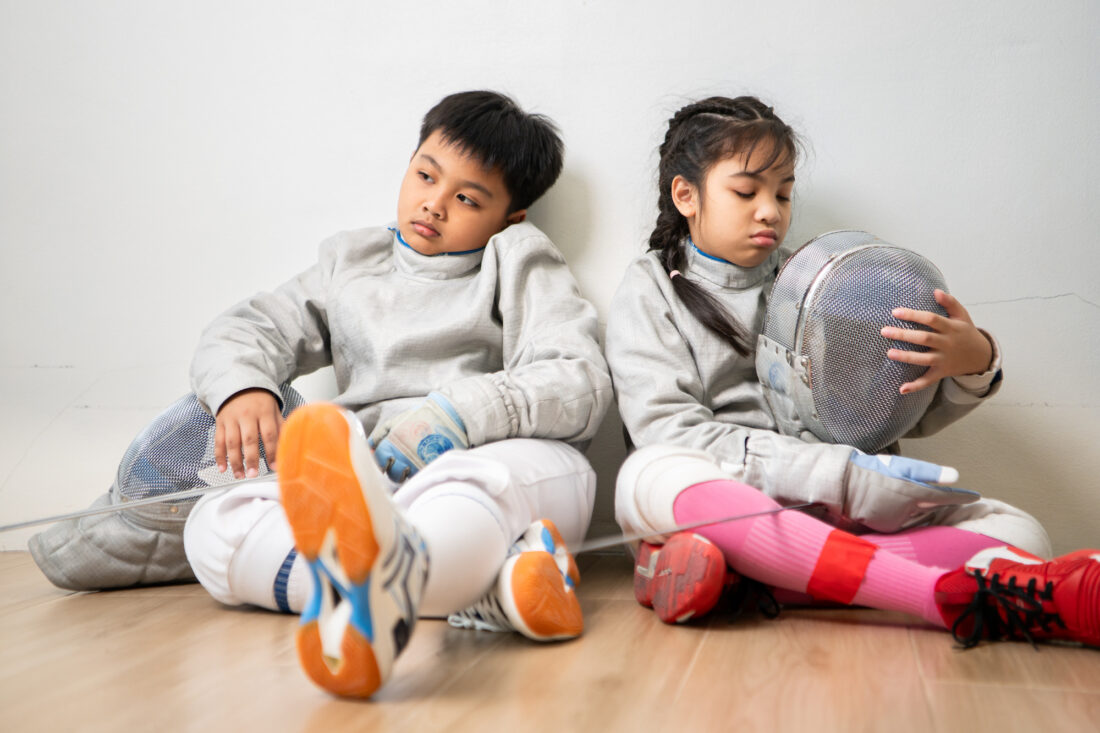
The possible challenges of individual sports
Individual sports may encourage independence, but they can also concentrate pressure.
Disappointment can feel more personal
When a team loses, responsibility is distributed. When an individual competitor loses, finishes last or makes an obvious mistake, there may be nobody else to share the result.
Some children respond by analysing what they can improve. Others experience the result as a judgement of their worth.
Parents and coaches need to separate the child from the performance.
“You had a difficult race” is not the same as “You are a poor swimmer.” A score describes what happened in one moment. It does not define the child or predict what they will become.
Competition may feel lonely
Children in individual sports can have teammates, training partners and supportive coaches, but the decisive moment may still be theirs alone.
During a race, routine or match, they may need to manage nerves without the immediate reassurance of a group.
Some children find this empowering. Others experience it as isolating.
A strong club culture can reduce that isolation by encouraging participants to support one another even when they compete individually.
Perfectionism can intensify
Sports such as gymnastics, figure skating, diving and martial arts often involve close attention to form and precision.
This can build discipline, but children who are already perfectionistic may become overly focused on mistakes.
Watch for signs that your child can no longer acknowledge improvement because they are concentrating only on what remains imperfect.
Coaching language matters here. Detailed correction can be constructive, but constant criticism without recognition of progress may erode confidence.
Opportunities for cooperation may be less frequent
An individual sport may not require the same continuous collaboration as football, netball or basketball.
Children can still learn respect, patience and sportsmanship, but they may have fewer opportunities to negotiate roles or make collective decisions during competition.
This is one reason many families combine individual activities with group-based ones rather than treating the choice as permanent.
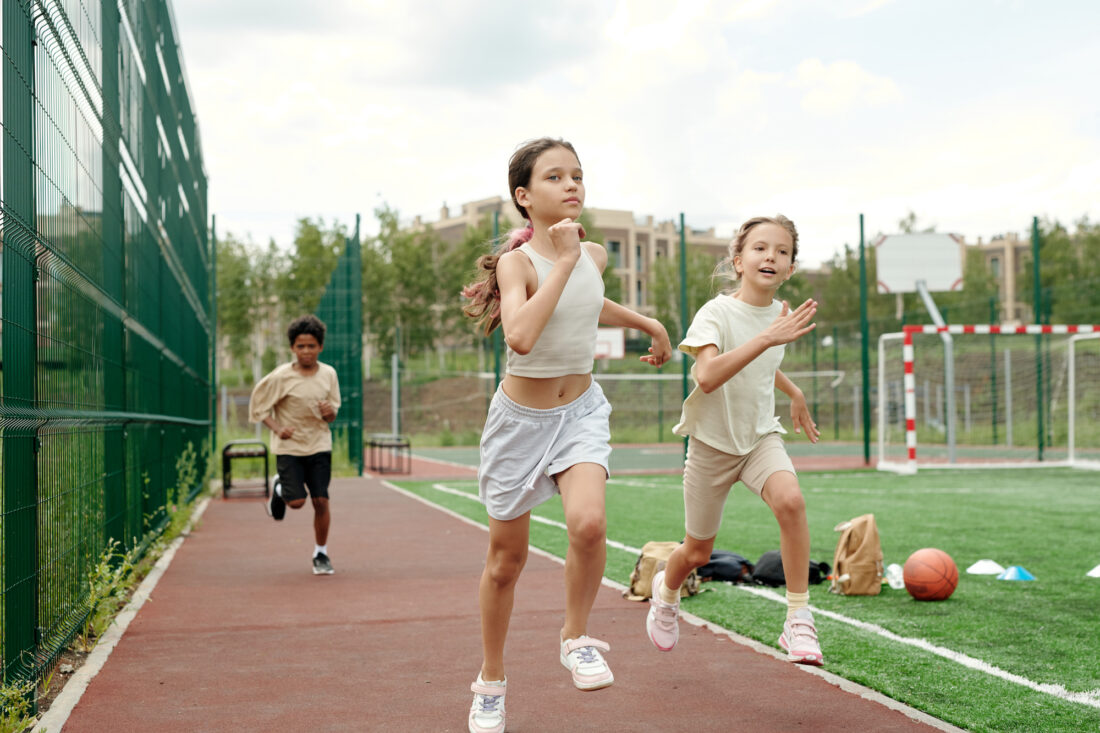
Which environment might suit your child?
Personality can offer clues, but it should not become a label.
A socially confident child may love swimming. A reserved child may become deeply attached to a football team. An independent child may enjoy the strategy and constant communication of basketball.
Children also behave differently in different settings. A child who appears quiet in class may be outspoken on a sports field. Another who is energetic at home may become cautious in an unfamiliar group.
Treat the following as tendencies to observe, not rules to follow.
A child may enjoy a team environment when they:
- Feel energised by being with other children
- Enjoy working towards a shared goal
- Are motivated by friendship and group encouragement
- Like fast-moving, unpredictable situations
- Enjoy celebrating achievements with others
- Respond well to having a defined role
- Learn best by observing and interacting with peers
A team sport may also help a child practise skills they do not yet find easy, such as speaking up, handling disagreement or accepting that other people work differently.
The child does not need to possess strong teamwork skills before joining. Sport can be one place where those skills develop.
A child may enjoy a more individual environment when they:
- Like concentrating on one skill at a time
- Enjoy tracking personal progress
- Prefer predictable goals and routines
- Are motivated by self-improvement
- Feel overwhelmed by noisy or fast-moving groups
- Enjoy practising independently
- Prefer having greater control over their own performance
An individual sport can also help a child develop skills they currently find difficult, including patience, independence and managing personal pressure.
Again, these traits are not fixed. The purpose of observation is not to place your child into the “correct” category. It is to notice where they currently feel engaged enough to learn.
Do shy children need individual sports?
Parents sometimes assume a shy child should begin with swimming, martial arts or another individual activity.
That may be appropriate, but shyness alone does not determine the answer.
A quieter child may feel safer in a structured team where their role is clear and conversation develops naturally around the game. They do not need to invent a social interaction because the activity gives them something to do together.
Another child may feel watched and exposed during team play and prefer building competence privately before entering a more social setting.
The coaching environment is often more important than the category.
A calm coach who introduces children gradually may make a team sport accessible. A harsh individual instructor may make even a quiet one-to-one activity intimidating.
Consider how the child responds to the actual class rather than choosing solely according to how you describe their personality.
Does your child have to choose one type?
No. In fact, participating in both team and individual activities may give children a wider range of experiences.
One study examining adolescent sport participation found that involvement in both team and individual sports was associated with particularly strong psychosocial wellbeing, although observational research cannot prove that sport type alone caused those outcomes.
Possible combinations include:
- Football and swimming
- Basketball and athletics
- Netball and gymnastics
- Rugby and martial arts
- Hockey and climbing
- Volleyball and tennis
- Dragon boating and archery
A team sport may give a child opportunities to communicate and cooperate, while an individual activity allows them to focus on technique and personal targets.
The physical demands may complement one another too. Swimming can build cardiovascular fitness without the same impact as running. Climbing develops grip strength, balance and problem-solving. Martial arts may support coordination and body awareness.
However, “more variety” should not become “more commitments”.
A child taking part in several activities still needs unstructured play, rest, family time and enough space for school. The value of combining sports disappears if the schedule leaves everyone exhausted.
Parents exploring several options may find it useful to first consider how to help your child find a sport they genuinely enjoy without breaking the bank rather than signing up for multiple long-term packages immediately.
Age and developmental stage matter
The sport a child enjoys at six may be very different from the one they prefer at 14.
Young children are still developing balance, coordination, attention and the ability to understand rules. Many benefit from playful, varied movement rather than highly specialised training.
As children grow, they often become better able to understand strategy, manage competition and decide which activities feel personally meaningful.
The American Academy of Pediatrics has advised families to be cautious about intensive early specialisation. Its guidance has supported early participation in a variety of sports, followed by later specialisation when appropriate, because diversification may support longer-term participation and physical fitness while reducing some risks associated with repetitive training.
This does not mean every child must change activities constantly or that commitment is harmful. Some children develop a clear passion early.
The distinction is between a child choosing to deepen their involvement and adults deciding that early specialisation is necessary for future success.
Around ages four to six
At this stage, enjoyment and basic movement skills should usually take priority over formal competition.
Children may still be learning to follow instructions, wait for turns and manage frustration. Short, playful sessions tend to be more suitable than long periods of repetitive training.
A child who appears “bad at football” at five may simply need more time to develop coordination, attention or confidence in a group.
Around ages seven to ten
Children often become more able to understand rules, work towards goals and notice their own progress.
They may begin expressing stronger preferences for particular sports. Friendships can also become an important reason for attending.
This is a useful period for trying different activities without assuming that every class must lead to long-term commitment.
Around ages 11 to 13
Competition and peer comparison may become more noticeable.
Some children become highly motivated by improvement, while others withdraw because they believe they are “not sporty”. Physical changes during puberty can temporarily affect coordination, confidence and performance.
Parents should be careful not to interpret a difficult season as proof that a child lacks ability or commitment.
During the teenage years
Older children are more capable of contributing to decisions about training, competition and specialisation.
Their reasons for participating may also change. They might value friendship, fitness, stress relief, achievement or belonging more than they did when younger.
A shy six-year-old may become a confident teenager who enjoys team competition. A child who once lived for football may discover a preference for climbing, athletics or strength training.
Changing direction is not necessarily a sign of poor commitment. Sometimes it reflects greater self-awareness.
The coach may matter more than the sport
Parents often spend a great deal of time comparing football with swimming or gymnastics with martial arts.
A more revealing comparison may be between one programme and another.
Two classes offering the same sport can create very different experiences.
A good youth coach should:
- Give instructions children can understand
- Treat mistakes as part of learning
- Offer meaningful participation rather than focusing only on top performers
- Set expectations that match the child’s age
- Communicate respectfully
- Recognise effort and improvement
- Respond appropriately to bullying or exclusion
- Avoid using fear, humiliation or excessive exercise as punishment
- Be clear with parents about goals, progression and competition
Organised sport can support children’s development, but the American Academy of Pediatrics notes that participation also carries risks when programmes are poorly structured or adults place excessive emphasis on performance.
Observe how the coach responds when a child struggles.
Do they explain the skill differently? Do they become impatient? Does the child leave understanding what to work on, or merely feeling embarrassed?
A child who dislikes one class may not dislike the sport itself. They may dislike that particular teaching style, peer group or level of competition.
Practical considerations are part of the decision
The “best” sport cannot be separated from what the family can realistically sustain.
An activity may suit your child’s personality perfectly but still become unmanageable if it requires long journeys across Singapore several times a week.
Before committing, consider the full impact on family life.
Scheduling and training frequency
Ask how often children are expected to train and whether attendance becomes more intensive as they progress.
A once-weekly recreational class is different from a competitive programme involving weekday training and weekend matches.
Consider school hours, homework, sleep and the child’s need for downtime. A packed schedule may look productive while leaving the child with little energy to enjoy any of it.
Travel time
A 60-minute class can require considerably more time once travelling, changing and waiting are included.
This becomes especially relevant when training takes place during peak periods or at venues far from home.
A nearby programme that is slightly less prestigious may be more sustainable than a highly regarded academy that creates weekly transport stress.
Family budget
Course fees are only one part of the cost.
Families may also need to pay for:
- Registration
- Uniforms
- Shoes
- Protective equipment
- Grading fees
- Competition entry
- Club membership
- Facility charges
- Transport
- Camps or additional coaching
Before enrolling, ask for the likely annual cost rather than only the introductory rate.
Equipment and replacement costs
Some sports require relatively little equipment at beginner level. Others become more expensive as children grow or compete.
Children may outgrow shoes, uniforms and safety equipment quickly. Specialised items may need to be replaced for fit or safety rather than because they are visibly worn out.
Check what can be borrowed, rented or bought second-hand before purchasing everything at once.
Sibling logistics
Having siblings in the same sport can simplify transport, but convenience should not override individual interests.
One child may enjoy football while another prefers gymnastics. Forcing them into the same activity may save time while reducing one child’s motivation.
Where possible, look for venues offering several activities nearby or classes scheduled close together.
School and examination periods
A sport that works in Primary 2 may become difficult during major school transitions or examination years.
This does not necessarily mean the child must stop. Training frequency may be reduced temporarily, or they may move from competitive to recreational participation.
A sustainable activity should be able to fit around changing life circumstances.
How to tell whether the environment is working
Children will not enjoy every session.
They may complain before training because they are tired, disappointed about a recent result or reluctant to stop what they are doing at home. Occasional resistance does not necessarily mean the sport is wrong for them.
Look at the pattern over time.
Ask:
- Does my child usually seem lighter, calmer or more energised afterwards?
- Do they talk about what happened during the session?
- Do they want to show us something they learnt?
- Are they building confidence in their body and abilities?
- Are they developing friendships or a sense of belonging?
- Can they recover from mistakes with support?
- Are they becoming more willing to practise?
- Do they feel safe with the coach and other participants?
- Are they learning to persevere without becoming afraid to fail?
- Are we constantly forcing them to attend?
- Has the sport begun affecting sleep, schoolwork or family life?
- Is pressure coming mainly from the child, coach or parent?
One difficult answer does not require an immediate withdrawal.
For example, a child may not have made close friends yet but still enjoy the activity. Another may sometimes need encouragement to attend but feel proud afterwards.
Concern becomes more justified when several negative signs persist: regular anxiety, physical complaints before every session, fear of the coach, repeated exclusion or a loss of enjoyment that does not improve after rest and conversation.
These may be among the signs that your child has not yet found the right sport or sporting environment.
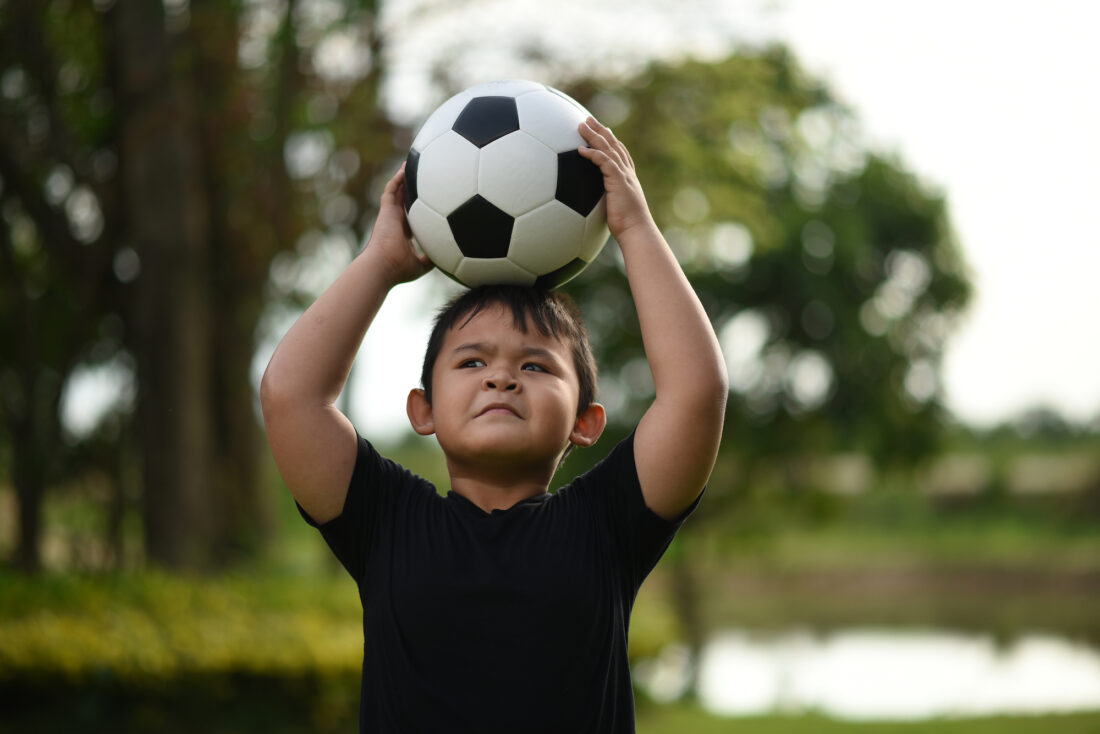
What if your child wants to stop?
Wanting to stop can mean several different things.
The child may dislike the activity. They may be struggling with a particular coach, teammate or skill. They may be tired, overscheduled or embarrassed that progress feels slow.
Before deciding, ask what they want to stop and why.
Avoid immediately framing the issue as quitting versus perseverance. A child can learn perseverance without remaining indefinitely in an environment that is harmful or unsuitable.
At the same time, leaving whenever something becomes difficult may prevent them from experiencing the satisfaction of improvement.
A reasonable approach is to distinguish between discomfort and distress.
Discomfort might include:
- Finding a new skill difficult
- Feeling nervous before a competition
- Being disappointed after losing
- Needing time to adjust to unfamiliar teammates
- Going through a temporary plateau
Distress may involve:
- Persistent fear
- Humiliation
- Bullying
- Physical pain that is ignored
- Repeated exclusion
- Loss of sleep or appetite
- Feeling worthless because of performance
With discomfort, children may need encouragement, adjusted goals or time. With distress, adults need to investigate and act.
Where appropriate, agree on a review point rather than forcing an immediate permanent decision. A child might complete the current short term, try a different coach or move to a recreational group before deciding whether to leave.
Which type of sport builds confidence better?
Neither team nor individual sport has a monopoly on confidence.
Team sports may develop social confidence. Children learn to speak up, cooperate and find their role within a group.
Individual sports may build confidence through direct evidence of personal progress. Children see that their practice has helped them swim further, climb higher or execute a technique more effectively.
But confidence is not produced by the category alone.
A child repeatedly benched in a team may lose confidence. A swimmer constantly compared with faster classmates may do the same. Conversely, a supportive coach in either environment can help children view ability as something that develops.
The better question is:
What kind of confidence does my child currently need, and does this environment help them build it?
Which type of sport burns more energy?
Whether a sport is organised around a team or an individual does not determine how physically demanding it is.
Intensity depends on the activity, session structure, duration and the child’s level of participation.
A vigorous swimming lesson may involve more continuous movement than a beginner’s baseball session. A fast basketball match may demand more energy than a technical archery class.
The World Health Organization recommends that children and adolescents aged five to 17 average at least 60 minutes of moderate-to-vigorous physical activity per day across the week, with vigorous aerobic and muscle- and bone-strengthening activities included regularly. This activity does not have to come from one organised sport. Walking, cycling, playground time, school activities and informal games all contribute.
Rather than choosing solely according to which sport appears to burn the most energy, consider what your child will participate in consistently.
A theoretically intense sport offers little benefit when a child spends most sessions disengaged or asking to leave.
The goal is not to produce an elite athlete
Children’s sport is increasingly presented as an investment.
Parents may feel pressure to choose the “right” academy, begin early, add private coaching or ensure their child does not fall behind.
For a small number of children, sport will become a serious competitive pursuit. That path may eventually require difficult decisions about training and specialisation.
For most children, however, the most valuable outcome will not be a medal, scholarship or place on a national team.
It will be a positive relationship with movement.
Success may look like a child who:
- Feels comfortable using their body
- Knows that skills improve through practice
- Can lose without believing they are a failure
- Can win without belittling others
- Finds enjoyment in being active
- Develops friendships through shared interests
- Understands when to persist and when to speak up
- Continues moving in some form as they grow older
A child does not need to be exceptional at a sport for it to be worthwhile.
The most suitable activity is one that helps them grow without making movement feel like another test they must pass.
When deciding between team and individual sports, do not search for the option that is best in theory.
Look for the environment in which your child feels safe enough to try, interested enough to continue and challenged enough to grow.
That may be a team, an individual activity or a combination of both.
It may also change.
There is no perfect choice to make once and never revisit. There is only the next activity that helps your child build confidence, enjoy being active and discover what their body can do.
Frequently asked questions
Can my child play both team and individual sports?
Yes. Participating in both can expose children to different skills and experiences. A team activity may develop communication and cooperation, while an individual sport may strengthen focus and personal accountability.
The combination should still leave enough time for rest, school, family life and unstructured play. More activities are not necessarily better when the schedule becomes exhausting.
Which develops confidence better?
Both can develop confidence in different ways.
Team sports may support social confidence, communication and a sense of belonging. Individual sports may help children build self-trust through visible personal improvement.
The quality of coaching and the child’s experience matter more than the category alone.
Which is better for shy children?
Either can work.
Some shy children feel more comfortable in an individual activity where they can focus on one skill at a time. Others benefit from a structured team environment where interaction develops naturally around the game.
A supportive coach and psychologically safe environment are more important than choosing according to a personality label.
Which burns more energy?
Energy use depends on the particular sport, training intensity, duration and how actively the child participates.
A demanding team sport can involve sustained running, while an individual activity such as competitive swimming or athletics can be equally intense. Choose an activity your child is likely to practise consistently rather than relying only on estimated energy expenditure.
What if my child wants to switch sports?
Changing interests is normal, particularly as children grow.
Talk to your child about what they dislike before making a decision. The issue may be the coach, group, competition level or schedule rather than the sport itself.
Where possible, complete a reasonable short-term commitment, address specific problems and then review the decision together. Persistent distress, bullying or unsafe coaching should be taken seriously rather than treated as a lesson in perseverance.
Should siblings play the same sport?
Not necessarily.
Sharing an activity can simplify transport and expenses, but siblings may have different interests, abilities and social needs. Allowing each child to explore suitable options may lead to greater enjoyment and less comparison between them.
Are individual sports really individual?
Not always.
Children in swimming, gymnastics, martial arts, climbing and athletics often train alongside others and form strong relationships with their coaches and peers. The main difference is usually that performance is measured individually rather than through a collective result.
Are team sports always more social?
Team sports create more built-in opportunities for cooperation, but they do not guarantee friendship or inclusion.
A poorly managed team can feel isolating, while an individual sports club can create a warm and supportive community. Observe the culture of the particular programme rather than relying only on its format.
How long should my child try a sport before deciding?
There is no fixed period, although one isolated lesson may not provide enough information.
A short trial programme or school term often gives children time to move beyond first-day nerves. However, parents do not need to insist on finishing a lengthy package when there are serious concerns about safety, bullying or the coach’s behaviour.
Should my child specialise in one sport?
Most younger children do not need to specialise early.
Trying a variety of activities can expose them to different movement patterns, reduce repetitive training and help them discover what they genuinely enjoy. Older children who develop a strong interest may later choose to focus more deeply on one sport.
The decision should reflect the child’s goals and readiness rather than fear that they will fall behind.
Images: Envato


 Melissa Fann