
It’s Not Your Body — It’s Your Bandwidth
Sometimes we look in the mirror and think we’re unhappy with our body… when what we’re actually unhappy with is the mental load. The exhaustion. The noise. The constant pressure to perform. The invisible work no one sees. Most mothers don’t dislike their reflection — they’re simply running on empty. And that emptiness makes everything look worse.
On top of that, millennial mothers are in a uniquely stressful position: we’re trying to raise our children without the trauma we received, while our own mothers (out of love, habit, or culture) still insist on commenting on how we parent. “Why are you so soft?” “Last time we didn’t do this.” “You’re spoiling the child.” “If they cry, let them cry.” So now, we’re raising children and raising our inner child — often while being criticised by the very people we’re trying not to emulate. That mental tug-of-war doesn’t just drain you — it distorts how you see yourself.
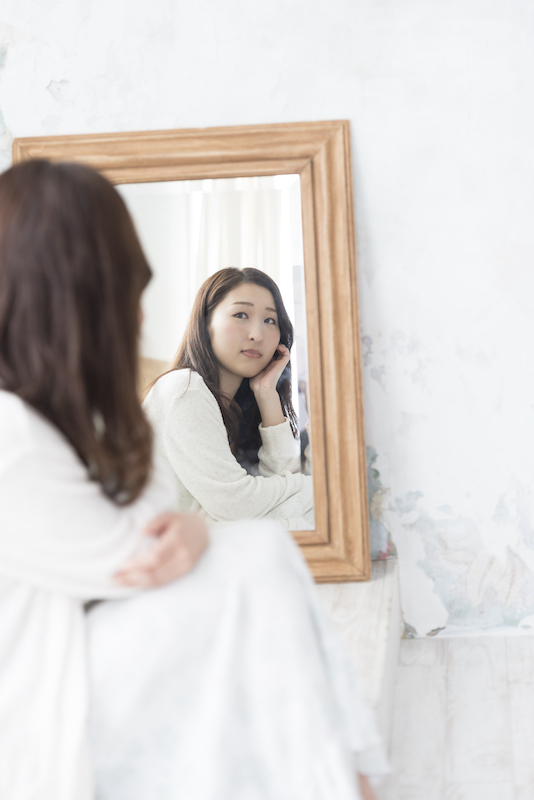
The Emotional Weight No One Sees
As mothers, we’re doing far more than the world realises. We’re working, caregiving, planning, remembering, managing emotions, processing our own childhood wounds, and trying to keep everyone alive and fed. All of that takes up mental space. And when you’re mentally overloaded, it’s very easy to look at your body and think that is the problem. “I feel heavy…because I look heavy.” “I feel tired…because I look tired.” “I feel like I’m failing…because my body doesn’t look how it ‘should’.” We attach emotional weight to physical weight. Not because we’re vain, but because when everything feels overwhelming, the body becomes the easiest target. It’s the thing we can see, so it becomes the thing we blame.
Why Mental Load Warps Your Body Image
When your mind is overloaded, three things happen:
1. Exhaustion looks like ugliness
You’re not unattractive. You’re burnt out. But a tired brain can’t distinguish the two.
2. You blame your body for emotional discomfort
Stress, identity conflict, sleep deprivation, and guilt can all masquerade as “I hate how I look”.
3. You want control somewhere, so you target your body
When nothing else feels manageable, you think, “At least I should be able to control my weight.” This is how body confidence quietly erodes — not from appearance, but from emotional overload.
View this post on Instagram
Millennial Parenting Is a Different Battlefield
We’re the generation trying to break cycles: conscious parenting, attachment styles, emotional literacy. But we’re doing it while our own parents still operate from “old school” Asian culture — where obedience is respect, emotional expression is weakness, and discipline means authority. We’re trying to raise children with compassion…while being criticised for it. We’re trying to avoid repeating trauma…while still being parented by people who don’t recognise theirs. We’re trying to build confidence in our children…while our mothers still make comments about feeding, sleep habits, discipline style — and sometimes even our bodies.
That intergenerational clash is mentally exhausting. And the heavier your mind feels, the harsher you become on yourself. Confidence can’t grow in an environment that constantly questions your worth, your methods, and your decisions.
Let’s Be Honest: You CAN Be Unhappy About Your Weight
This is the part most body positivity narratives skip — but let’s be real. You can love yourself AND still not love your current weight. You can care for your body AND want it to feel lighter, stronger, healthier. You can value your worth AND still desire change. Wanting to lose weight isn’t toxic on its own. It becomes toxic when:
- you’re doing it to please others
- you’re doing it out of shame
- you’re doing it because society demands it
- you tie your value to the number
But wanting to feel physically better? To move without pain? To have more energy? To not huff going up the stairs? To fit comfortably in your clothes again? That’s not vanity — that’s self-respect. It’s also deeply aligned with body neutrality. Because neutrality says: “My body is allowed to change. And I’m allowed to change with it.”
Not from pressure.
Not from punishment.
But from choice. From desire. From health. From joy.
What Body Neutrality Looks Like When You’re Overwhelmed
Neutrality is not passivity. It’s clarity. It’s removing the noise so you can decide what you actually want — not what others expect. For overwhelmed mothers, neutrality might sound like:
- “My body is tired because I’m doing a lot, not because I’m failing.”
- “I want to feel stronger — not for society, but for myself.”
- “I can work towards feeling better without hating myself.”
- “I don’t owe anyone a ‘bounce back’.”
- “My mother’s comments do not define my parenting or my body.”
On heavy days, neutrality might simply be: “This is my body today.”
And some days, that’s more than enough.
Ready to Rebuild Strength, Confidence, and a Sense of Self?
If any part of this feels familiar — the invisible load, the parental pressure, the identity split, the frustration with your body, the yearning to feel like you again — you’re not failing. You’re exhausted. And you don’t have to keep holding everything alone. I’m hosting a free live webinar designed for mothers who want to rebuild confidence from a place of strength, clarity, and compassion:
The Strong Mother Method: Rebuild Your Body, Confidence & Identity in 12 Weeks
In this session, you’ll learn:
✨ Why your postpartum body feels “stuck”
✨ How overwhelm distorts body image
✨ How to feel strong again in 20–30 minutes a day
✨ How to rebuild identity after motherhood
✨ How to desire change without shame
✨ How to drop the guilt and reconnect with your body
Bonus: Only live attendees will receive the Post-Partum Confidence Starter Pack (worth S$97) — free.
👉 Click here to save your seat (very limited spots)
Images: Header image created using AI by Melissa Fann, the rest from Envato

 Melissa Fann
 Trevor Klass