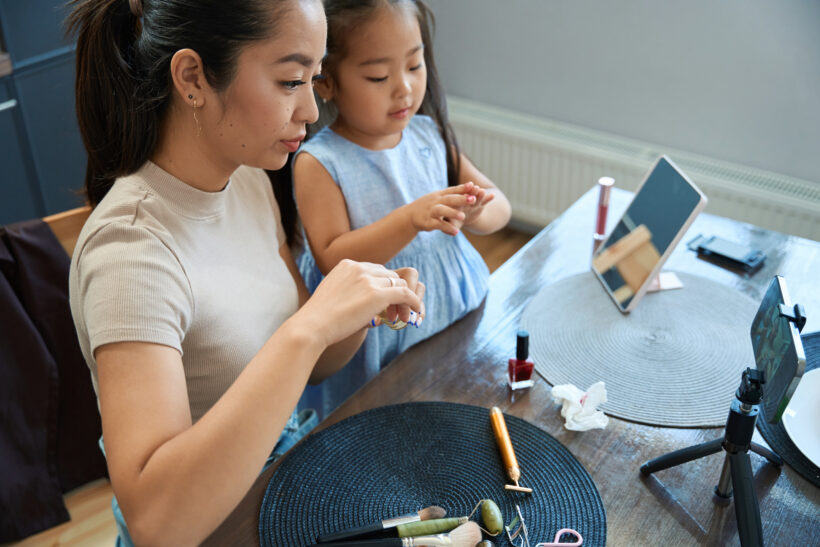

This International Women’s Day, I want to talk a little bit about something that touches all of us at home. Especially if you’re a mother with young children. We have so many questions about raising them to be confident and even body confident so that they do not need to feel the same pressures that we do when faced with the constant barrage of body aesthetics on various media platforms. So, let’s talk about body confidence at home and how we can raise empowered and confident children.
Why Body Confidence Starts at Home
Body image research consistently shows that family attitudes influence children’s self-perception long before media does. The way parents talk about weight, ageing, or appearance can shape how children evaluate their own bodies.
Psychologists note that children absorb subtle cues: complaints about “getting fat,” obsessing over diets, or hiding the body in shame can quietly signal that bodies are something to criticise rather than respect.
Conversely, homes where bodies are treated as normal, functional and worthy of care can help children develop a healthier relationship with their own bodies.
For girls in particular, this foundation matters. Studies have found that body dissatisfaction can begin as early as primary school age, making early conversations critical.
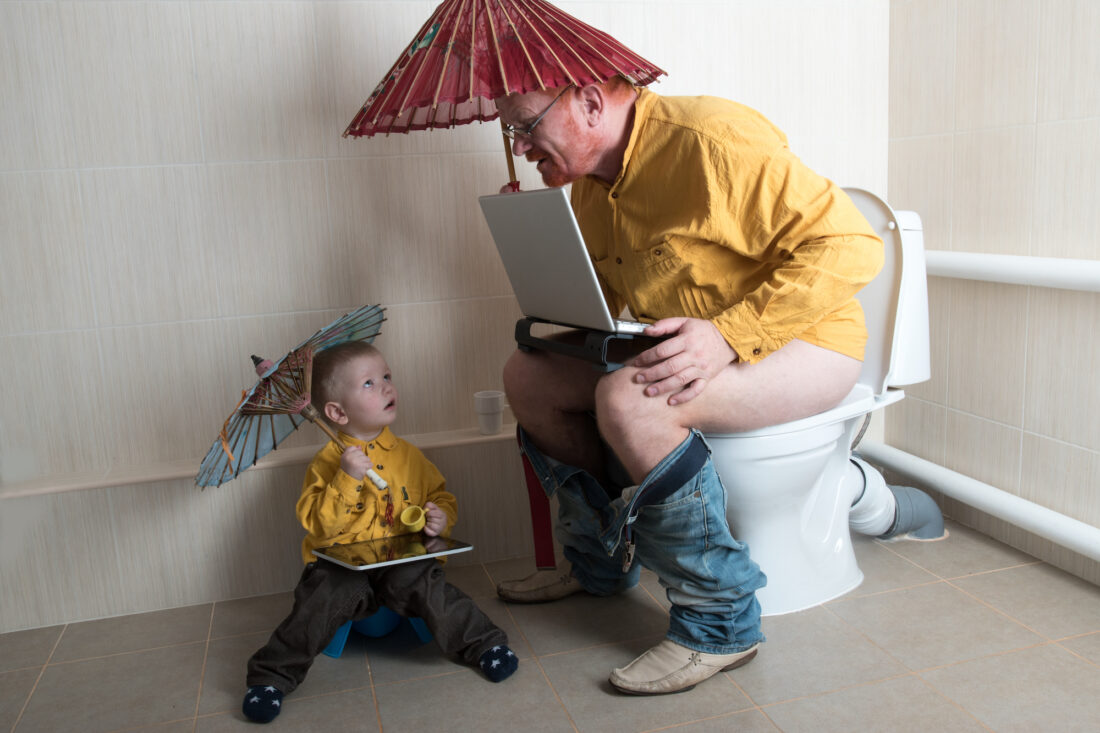
The Question Many Parents Wonder About: Nudity Around Children
One topic that often surfaces in parenting discussions is whether it’s appropriate for children to see their parents naked.
Child development experts generally agree that young children do not attach sexual meaning to nudity. To them, a naked body is simply another human body. In fact, many parents have experienced the same situation: a toddler wandering into the bathroom or bedroom while they are changing or showering without thinking twice about it.
Psychologists often emphasise that what matters is how adults react. When nudity is treated as calm and matter-of-fact rather than something shameful, children learn that bodies are normal.
Dr Deborah Gilboa, a family physician and parenting expert, has noted in interviews that children tend to see nudity as ordinary unless adults signal embarrassment or secrecy around it.
Similarly, child development specialists often explain that young children are primarily curious about differences between bodies, which creates opportunities for simple, age-appropriate conversations about anatomy, privacy and respect.
Turning Everyday Moments Into Body-Confidence Conversations
These ordinary moments can become natural openings for meaningful conversations about body confidence.
Instead of reacting with panic or embarrassment, parents can use them to communicate simple messages such as:
- Bodies come in many shapes and sizes
- Every body deserves respect
- Bodies change as we grow older
- Our bodies help us move, play, learn and experience life
These conversations don’t need to be formal lectures. Often they emerge casually during everyday routines, when children ask questions about bodies, pregnancy, scars, stretch marks or ageing.
What children take away is not the exact words, but the tone of acceptance.
Teaching Privacy Without Teaching Shame
Of course, body confidence also involves learning boundaries and privacy.
Experts often recommend explaining that while bodies are normal, certain parts are private and should be covered in public spaces. This distinction helps children understand personal boundaries without associating shame with their bodies.
For example, parents might explain:
- “Everyone has private body parts.”
- “Those parts are covered in public.”
- “Your body belongs to you.”
These conversations also lay the groundwork for body autonomy and consent, which are increasingly recognised as essential parts of raising confident and safe children.
Why Your Own Body Confidence Matters
Perhaps the most powerful influence on a child’s body image is how parents talk about their own bodies.
When children hear adults constantly criticising their appearance, dieting aggressively, or expressing embarrassment about ageing or stretch marks, they learn that bodies are problems to fix.
But when parents model self-acceptance — even imperfectly — they demonstrate something far more valuable: that bodies are not objects to judge, but vessels that allow us to live our lives.
Raising Confident Girls Starts With Honest Role Models
International Women’s Day often focuses on empowering women in workplaces, leadership and society. Yet empowerment can begin much earlier — in everyday conversations at home.
When girls grow up seeing bodies treated with respect rather than shame, they learn that confidence doesn’t come from fitting into a beauty standard.
It comes from understanding that their bodies are simply part of who they are — not the measure of their worth.
Research:
American Academy of Pediatrics, Curiosity About Bodies, HealthyChildren.org, accessed 5 March 2026, https://www.healthychildren.org/English/ages-stages/gradeschool/puberty/Pages/Curiosity-About-Bodies.aspx.
Raising Children Network, Childhood Sexual Development and Behaviour, Australian Government Parenting Resource, accessed 5 March 2026, https://raisingchildren.net.au.
Canadian Paediatric Society, Sexual Development and Behaviour in Children, Canadian Paediatric Society Position Statement, accessed 5 March 2026, https://cps.ca/en/documents/position/sexual-development-and-behaviour-in-children.
Dove Self-Esteem Project, The Dove Global Girls Beauty and Confidence Report, Dove, accessed 5 March 2026, https://www.dove.com/selfesteem.
University of Michigan C.S. Mott Children’s Hospital, National Poll on Children’s Health: Body Image and Self-Esteem, University of Michigan, accessed 5 March 2026, https://mottpoll.org.
Deborah Gilboa, MD, cited in “Should You Be Naked in Front of Your Kids? Experts Weigh In,” Today.com, accessed 5 March 2026, https://www.today.com/parents/should-you-be-naked-front-your-kids-experts-weigh-t180782.
Marika Tiggemann and Amy Slater, “NetGirls: The Internet, Facebook, and Body Image Concern in Adolescent Girls,” Journal of Adolescent Health 53, no. 5 (2013): 630–633, https://doi.org/10.1016/j.jadohealth.2013.04.026.
Images: Envato


 Melissa Fann