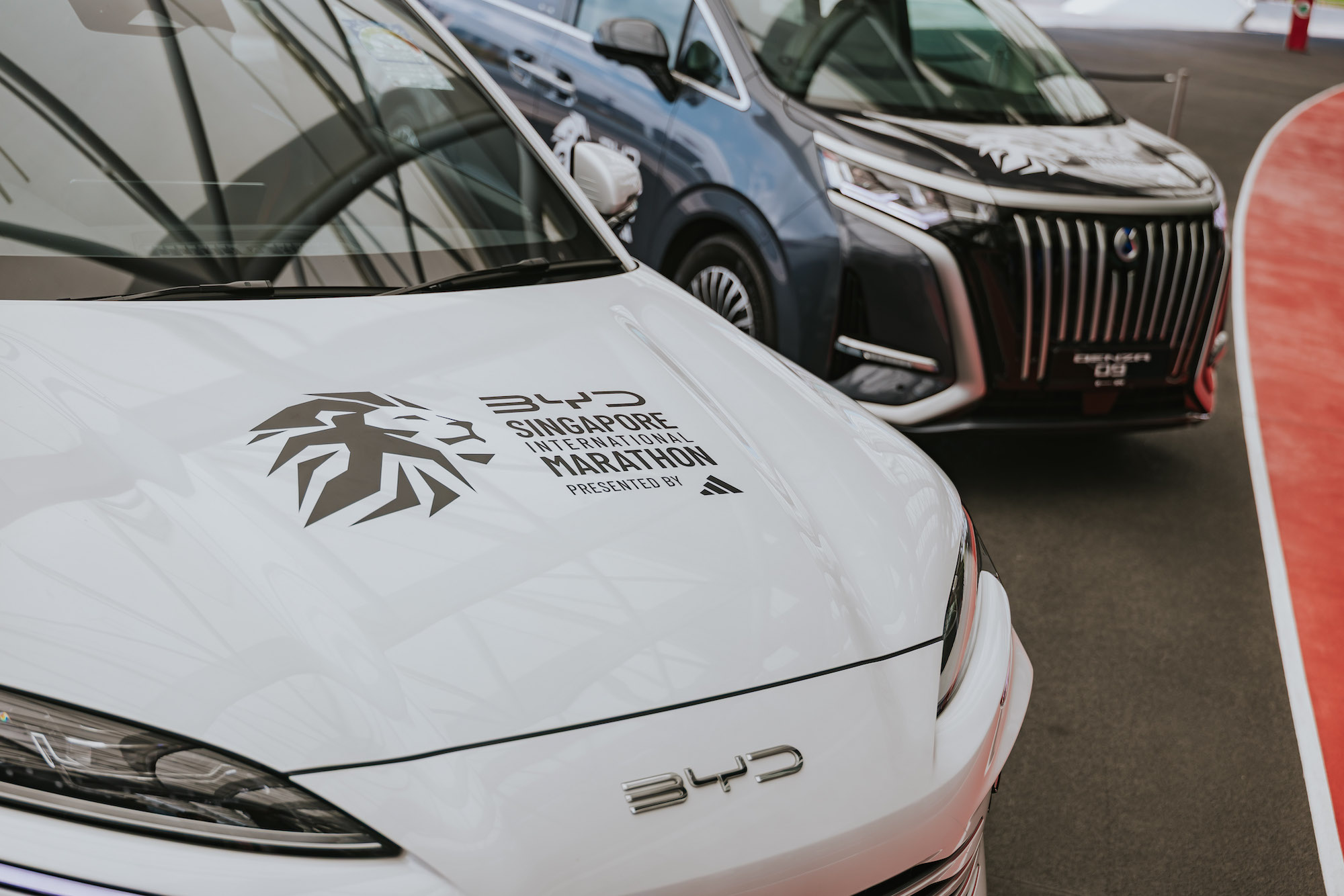
Local places for the full marathon at the BYD Singapore International Marathon 2026 presented by adidas have officially sold out, more than three months before runners take to the streets this December.
The 42.195km BYD Marathon has a capacity of 12,000 runners, with 9,000 places allocated to Singapore-based participants and another 3,000 reserved for international runners. While the local allocation has been fully taken up, a limited number of international entries remain available.
Demand is also building for the adidas Half Marathon. Slightly under 30% of its 18,000 places were still available as of the end of August, ahead of the 30 September registration deadline.
But beyond the early sell-out, another figure stands out: close to 40% of those registered for the marathon and half marathon will be attempting their respective distances for the first time.
More than 60% of these first-time participants are Singaporeans, suggesting that the popularity of distance running locally may be extending beyond experienced runners and established racing communities.
Runners from 95 countries have also registered across the Singapore International Marathon 2026 race programme.
More First-Time Runners Are Taking on Longer Distances
Training for 21.1km or 42.195km requires considerably more preparation than simply increasing the length of a regular weekend run. Runners need to consider pacing, fuelling, recovery, injury prevention and, particularly in Singapore, how their bodies cope with heat and humidity.
For those preparing for their first long-distance race, having enough time to train progressively can make a significant difference.
Organisers have released the 2026 routes 16 weeks ahead of race day, alongside a free training guide designed to help participants prepare for the conditions they are likely to encounter.
Those looking for places to build up their mileage can also explore some of Singapore’s scenic jogging routes, including East Coast Park and the Marina Bay area.
Singapore Marathon Route Adjusted With Heat and Congestion in Mind
Several changes have been made to this year’s marathon course, including moving the West Coast Highway climb much earlier in the race.
In 2024, runners encountered the climb at around the 32km mark. For 2026, it has been shifted to approximately 8km, when runners are expected to reach it during the cooler and darker early hours of the morning.
The change also reduces the likelihood of participants tackling the climb towards the closing stages of the marathon when temperatures are higher and fatigue has accumulated.
The full marathon route will now be approximately 99% mono-directional, with only a 300-metre section across Marina Barrage requiring runners to use the same stretch in opposite directions.
At East Coast Park, runners will enter using the cycling path before returning via the service road, another change intended to reduce congestion.
Benjamin Sheares Bridge will return as a major feature for both the marathon and half marathon.
For those doing the half marathon, the bridge comes at around the 16km mark, providing one of the final significant challenges before the finish at the National Stadium. The half-marathon route will be entirely mono-directional and will take runners past landmarks including the Merlion, Lau Pa Sat, Marina Bay Sands, Gardens by the Bay and the Esplanade before sunrise.
The emphasis on making the route easier to navigate and train for also reflects the challenges runners face when preparing for endurance events in Singapore’s climate.
Free Training Guide Available to All Runners
A free official training guide developed with Singapore national marathon record holder Soh Rui Yong has also been released, and it is available even to those who are not participating in the event.
“A Guide to Going the Distance in Singapore” covers pacing, heat adaptation, race nutrition, recovery and injury prevention, together with week-by-week plans spanning the 5km, 10km, half-marathon and full-marathon distances.
More than 2,000 copies of the guide had been downloaded by the end of August.
Structured preparation may be particularly useful for the large number of runners tackling a long-distance race for the first time. It also reinforces a point that often gets lost in the excitement of signing up for a race: increasing distance safely involves more than pushing harder each week.
Runners interested in more structured group training can also read about running clubs and structured marathon training in Singapore.
And training does not end at the finish line. Adequate rest and recovery after a demanding endurance event are just as important, particularly for runners who may be tempted to return to exercise too quickly. Our guide to post-marathon recovery covers some of the considerations runners should keep in mind after completing a long-distance race.
Singapore International Marathon Continues to Grow
The Singapore International Marathon was first held as a competitive race in 1982 and has since grown into one of the country’s largest annual sporting events.
The event entered a new chapter this year following a major change in its sponsorship and identity, becoming the BYD Singapore International Marathon presented by adidas. Readers can learn more about the changes to the Singapore International Marathon in 2026 and what they mean for the national race.
Organisers are now aiming for the marathon to eventually achieve World Athletics Platinum Label status, which would place it at the highest tier of international road races.
For runners who missed out on the local full-marathon allocation, places may still be available in other race categories, while the remaining international marathon allocation is limited.
Registration information, the complete 2026 routes and the official training guide are available on the Singapore International Marathon website. You can also see the Singapore International Marathon 2026 event listing on The Wellness Insider for the race weekend details.
Images: BYD Singapore International Marathon presented by Adidas


 Melissa Fann
 Shaameli Nadarajah